Occupational risk
- Shipyards and Navy service
- Insulation and boiler work
- Refineries and power plants
- Construction and brake repair
Free, confidential case reviews for patients and families in all 50 states
Diagnosis & treatment
Asbestos exposure is the leading cause of mesothelioma; risk depends on fiber type, dose, duration and how long ago exposure occurred.
Almost every conversation about mesothelioma comes back to asbestos. Understanding how exposure happened, and how much it matters that it was long ago, brief or indirect, helps families make sense of a diagnosis that can otherwise feel random. This guide explains how asbestos fibers cause damage, which settings carried the greatest risk, how people were exposed without ever handling asbestos themselves, and what other factors researchers have studied so far.
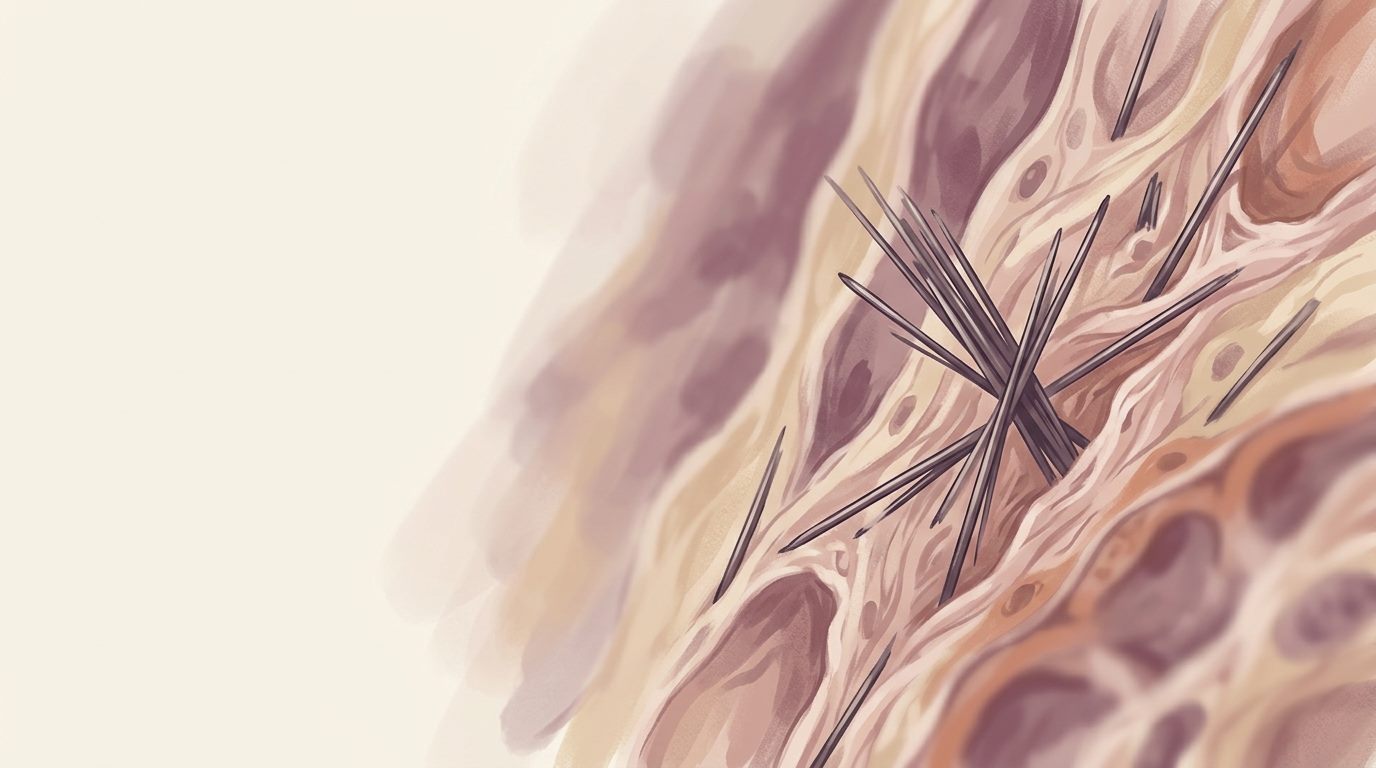
Asbestos fibers are extremely thin and durable. When breathed in, some travel deep into the lungs and work their way to the pleural lining. Others may be swallowed or carried through the lymphatic system to the abdomen. The body struggles to break these fibers down or clear them. Over many years, they cause persistent irritation and inflammation, and they can damage the genetic material inside nearby cells. As errors accumulate, some cells may begin to grow uncontrollably, eventually forming mesothelioma. This process is slow, which explains the typical delay of several decades between exposure and diagnosis. Because the fibers remain in the body, the risk does not disappear when exposure ends, even though a person may feel perfectly healthy for years.
The highest risks were in workplaces where asbestos products were made, installed, repaired or removed, particularly before strict regulations took hold in the 1970s and 1980s. Insulators, pipefitters, boilermakers, shipyard workers and sailors worked closely with asbestos insulation on pipes, boilers and turbines. Power plants, refineries, chemical plants, steel mills and paper mills used it extensively for heat protection. Construction workers encountered it in cement, joint compound, flooring and roofing. Auto mechanics were exposed through brake and clutch work. Workers in asbestos mines and product factories faced heavy exposure too. People who worked near these trades, such as laborers, supervisors and cleaners, could breathe the same dust even if they never touched the materials themselves.
Many people with mesothelioma never worked with asbestos directly. Family members were exposed when workers came home with dust on their clothes, hair and skin, and spouses shook out and washed those clothes for years. Children hugged parents after a shift or played near work vehicles. Some people lived near asbestos mines, processing plants or factories where dust escaped into the neighborhood. Others were exposed while renovating older homes, disturbing insulation, flooring or textured ceilings. Certain contaminated minerals, such as some vermiculite, have also been linked to exposure. These indirect routes are important because families often assume they have no asbestos history. Asking relatives about the jobs held by parents and spouses can uncover exposure that would otherwise be missed.
In general, the more asbestos a person breathed and the longer the exposure lasted, the higher the risk. Confined spaces, dusty tasks and a lack of protective equipment all increased the amount inhaled. However, researchers have not identified a level of exposure that is known to be safe, and mesothelioma has occurred after relatively brief but intense exposure. Fiber type also plays a role. Asbestos comes in several forms, and amphibole types such as crocidolite and amosite are generally considered especially potent for mesothelioma, while chrysotile, the most widely used type, has also been linked to disease. Many products contained mixtures. Because work records rarely describe fiber types, specialists focus on the tasks, materials and settings a person describes.
A small share of mesothelioma cases have no identifiable asbestos exposure. Researchers have looked at other possible contributors. Some naturally occurring mineral fibers, such as erionite found in certain regions, have been linked to mesothelioma. Previous radiation therapy to the chest or abdomen has been associated with a higher risk in some studies. Inherited changes in genes such as BAP1 can raise the chance of developing mesothelioma and several other cancers, and may make some people more vulnerable to asbestos. Age plays a role simply because of the long delay before the disease appears. Smoking does not cause mesothelioma, although it sharply increases lung cancer risk in people exposed to asbestos. For most patients, asbestos remains the central explanation.
Quick reference
Useful to print or bring to an appointment.
Questions
Related
Free, confidential case review for patients and families in all 50 states.