Pleural symptoms
- Shortness of breath
- Persistent dry cough
- Pain under the ribs
- Recurring pleural effusion
Free, confidential case reviews for patients and families in all 50 states
Diagnosis & treatment
Breathlessness, one-sided chest pain, abdominal swelling and unexplained weight loss are important warning signs, especially after past asbestos exposure.
Mesothelioma symptoms tend to creep in slowly and often look like everyday problems, such as a cough that will not settle, getting winded on the stairs or a stomach that feels bloated. That is part of why the disease is usually found late. This guide describes the symptoms linked to each form of mesothelioma, explains why they happen, and helps you decide when a symptom deserves prompt medical attention, especially if you have any history of asbestos exposure.
In its early stages, mesothelioma often grows quietly along a body lining without pressing on nerves or organs. By the time symptoms appear, they are usually vague and come on gradually. Tiredness, mild breathlessness and aches are easy to put down to age, weight, a chest cold or arthritis. Many people with mesothelioma are older and already live with other conditions, which makes new symptoms harder to separate from familiar ones. Doctors may reasonably treat a likely infection first. The difference is persistence: symptoms from mesothelioma tend to linger or worsen over weeks rather than clearing up. Keeping track of how long a symptom has lasted, and whether it is changing, gives your doctor valuable information.
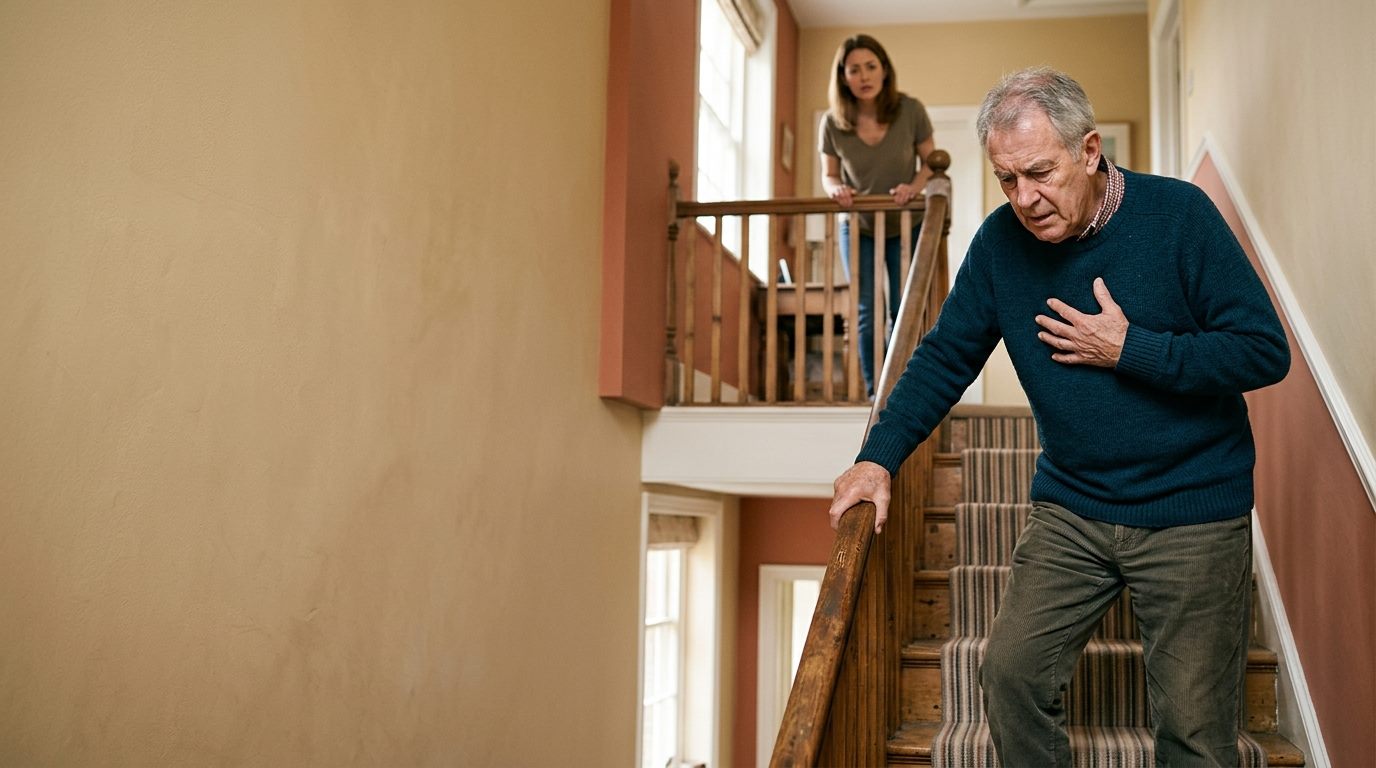
Pleural mesothelioma most often causes shortness of breath, which usually starts with exertion and gradually happens with less activity. The main reason is fluid collecting around the lung, which stops it expanding fully. Thickened lining can have the same effect. Chest pain is also common and often feels like a dull, constant ache on one side, sometimes spreading to the shoulder or upper abdomen, especially if the tumor presses on the chest wall. A dry cough, hoarseness or difficulty swallowing can occur as the disease grows. Some people notice that one side of the chest moves less when they breathe. Night sweats, fevers and a general sense of being unwell can accompany these chest symptoms.
Peritoneal mesothelioma tends to show up as abdominal swelling, discomfort or pain, often caused by fluid in the belly. People may feel full after small meals, lose their appetite, feel nauseated or notice changes in bowel habits. Weight loss can happen even while the waistline grows. Pericardial mesothelioma, in the lining of the heart, can cause chest pain, palpitations, breathlessness when lying flat and swelling of the legs. Testicular mesothelioma usually appears as painless swelling or a lump in the scrotum. Across all forms, unexplained tiredness, fevers, sweating and weight loss are common. None of these symptoms proves mesothelioma, but a combination that persists, especially with past asbestos exposure, deserves investigation.
Book an appointment if breathlessness, chest or abdominal pain, swelling or weight loss lasts more than a few weeks or keeps getting worse. Mention it clearly if fluid has been drained from your chest or abdomen before and the symptoms are returning, because recurring fluid is an important clue. Seek urgent care for sudden severe breathlessness, chest pain with fainting or a racing heartbeat, coughing up blood, or an abdomen that becomes very painful and swollen with vomiting. When you see a doctor, say directly if you worked in trades, shipyards, construction, industry or the military, or lived with someone who did. That history can change how quickly scans and specialist referrals are arranged.
Symptom relief often starts before any cancer treatment. Draining fluid from the chest or abdomen can ease breathlessness and pressure within hours. When fluid keeps returning, doctors may seal the space or place a small tube so it can be drained at home. Pain is managed with a plan that may combine regular medicines, targeted treatments and sometimes radiation to a painful area. Breathlessness can be eased with positioning, breathing techniques, fans and medication. Nutrition support helps with poor appetite and weight loss. Palliative care teams specialize in this kind of relief and can work alongside oncologists from the start. Reporting changes early gives your team the best chance to keep you comfortable and active.
Quick reference
Useful to print or bring to an appointment.
Further reading
Practical answers from our resource library.
Questions
Free, confidential case review for patients and families in all 50 states.