How it develops
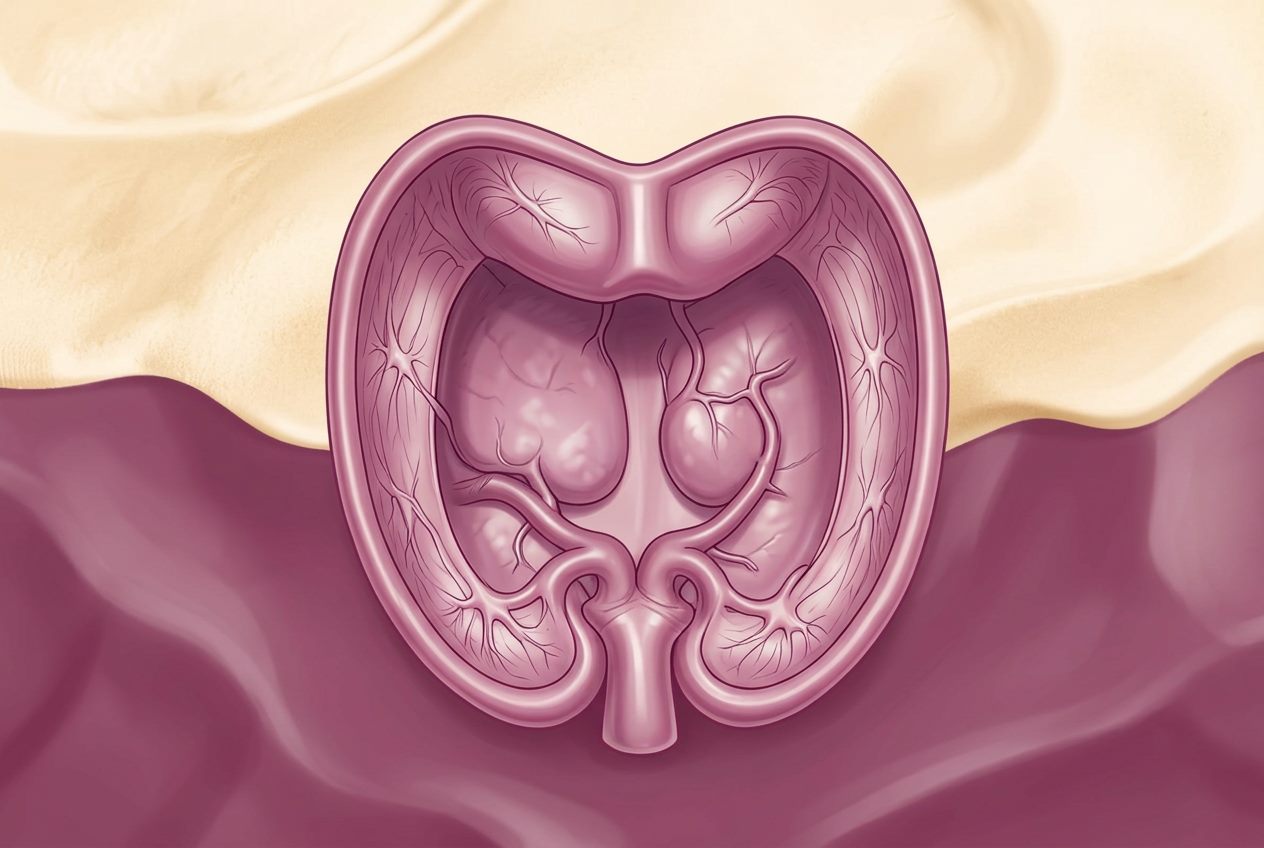
- Fibers reach the abdomen via swallowing or lymph
- Peritoneal lining thickens
- Ascites fluid accumulates
- Tumor nodules spread across the abdomen
Free, confidential case reviews for patients and families in all 50 states
Diagnosis & treatment
Mesothelioma of the abdominal lining, responsible for a significant minority of cases and often treated with surgery plus heated chemotherapy.
Peritoneal mesothelioma develops in the peritoneum, the thin lining that covers the organs of the abdomen and the inside of the abdominal wall. Its early signs, such as bloating, feeling full quickly or a growing waistline, are easy to blame on digestion or weight gain. Understanding how this form behaves helps explain why diagnosis often needs a surgical biopsy, why fluid builds in the belly, and why an experienced surgical team can make a real difference to the treatment options on the table.
Instead of forming a single tumor, peritoneal mesothelioma usually spreads as many small nodules and sheets of tissue across the abdominal lining. It can coat the surface of the intestines, the omentum, which is a fatty apron of tissue hanging over the bowel, and the underside of the diaphragm. Because it tends to stay within the abdomen for much of its course, doctors often focus on controlling disease inside the belly rather than elsewhere in the body. Surgeons describe how widely the tumor has spread using a score that adds up the disease found in each region of the abdomen. That score, along with the cell type, helps predict whether complete removal of visible tumor is realistic and whether a major operation is likely to help.
Many patients notice their belly getting larger even while they lose weight elsewhere. This is often ascites, a build-up of fluid in the abdominal cavity caused by the irritated lining producing more fluid than the body can absorb. Ascites can cause pressure, shortness of breath, early fullness at meals and discomfort when bending. A procedure called paracentesis uses a needle to drain the fluid, which can bring prompt relief and provides a sample for testing. Fluid tests alone often cannot confirm mesothelioma, so a doctor who sees repeated ascites without a clear cause may recommend imaging and a biopsy. Some people also develop bowel symptoms if tumor presses on the intestines, and these should be reported quickly because they can signal a blockage.
A CT scan of the abdomen and pelvis is usually the first detailed look, but peritoneal mesothelioma can be subtle on imaging and may be mistaken for other cancers that spread to the lining, such as ovarian or stomach cancer. For that reason, most specialists want tissue. A laparoscopy lets a surgeon look inside the abdomen through small incisions, take biopsies and judge how much disease is present, which also helps with surgical planning. Pathologists then use special stains to separate mesothelioma from look-alike cancers and to name the cell type. Because this form is uncommon, asking a center that sees peritoneal mesothelioma often to review the slides is sensible, especially if the original report sounded uncertain or listed more than one possible diagnosis.
For suitable patients, the treatment most associated with this disease is cytoreductive surgery combined with HIPEC. During cytoreduction, surgeons try to remove all visible tumor from the abdomen, which can involve taking out the omentum, parts of the lining and sometimes sections of affected organs. Once that is done, heated chemotherapy is circulated through the abdomen for a period during the same operation. The aim is to treat microscopic disease left behind while limiting how much of the drug reaches the rest of the body. This is a long, demanding procedure with a significant recovery, so centers weigh fitness, cell type and how widely the disease has spread before recommending it. The experience of the surgical team is one of the most important things to ask about.
Not everyone is a candidate for cytoreduction and HIPEC. Some people have disease that is too widespread, other health problems that make major surgery risky, or a cell type that is less likely to benefit. In those situations, treatment usually centers on medicine given through a vein, often chemotherapy based on pemetrexed and a platinum drug, and in some cases immunotherapy or a clinical trial. Care that controls symptoms matters just as much: draining fluid, managing pain and nausea, and protecting nutrition when eating becomes hard. A dietitian can be a valuable part of the team. If surgery was ruled out by one hospital, a second opinion from a center that performs these operations regularly can confirm whether that decision still stands.
Quick reference
Useful to print or bring to an appointment.
Further reading
Practical answers from our resource library.
Questions
Related
Free, confidential case review for patients and families in all 50 states.