Who should be on the team
- Thoracic or surgical oncologist
- Medical oncologist
- Specialist pathologist
- Palliative-care clinician
Free, confidential case reviews for patients and families in all 50 states
Diagnosis & treatment
A mesothelioma specialist treats this rare cancer regularly and works with surgeons, pathologists, radiologists and supportive-care clinicians.
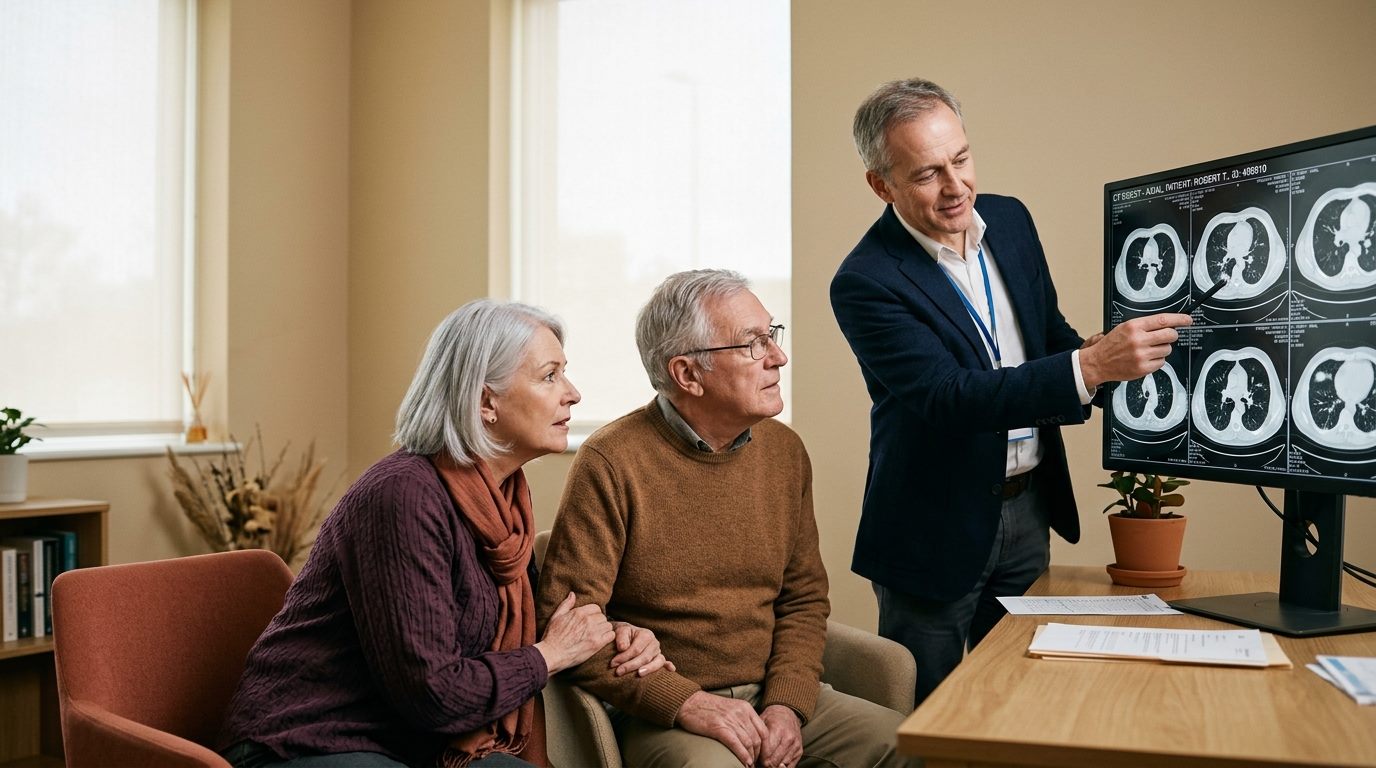
Most cancer doctors are skilled and caring, but mesothelioma is rare enough that few of them treat it often. A specialist who sees many cases knows how the disease behaves, which operations and drug combinations fit which patients, and which clinical trials are open. This guide explains who belongs on a mesothelioma care team, how to judge a doctor's experience without feeling awkward, how to prepare for a first specialist visit, and how to combine expert care with treatment closer to home.
Mesothelioma decisions often hinge on details that are easy to miss without experience. Is the cell type truly epithelioid, or is there a sarcomatoid component that changes the plan? Is the disease limited enough for surgery, and which operation suits this patient? Should treatment start with immunotherapy or chemotherapy? Doctors who manage mesothelioma regularly have seen how different patients respond and are more familiar with the evidence behind each choice. Surgeons who perform mesothelioma operations frequently tend to be more comfortable judging who will benefit and managing complications. Specialist centers also tend to have pathologists and radiologists who recognize the disease quickly. None of this means a local oncologist cannot help, but expert input at the planning stage can widen options and prevent avoidable delays.
A strong team brings several specialties together. A thoracic surgeon handles pleural surgery and chest procedures, while a surgical oncologist experienced in peritoneal disease handles abdominal operations and heated chemotherapy. A medical oncologist oversees chemotherapy, immunotherapy and trial options. A radiation oncologist advises on whether radiation can help with pain or local control. A pathologist confirms the diagnosis and cell type, and a radiologist interprets scans for staging and follow-up. Pulmonologists often manage fluid drainage and breathing problems. Palliative care clinicians focus on symptoms and planning. Nurses, dietitians, social workers and physical therapists fill essential gaps. At good centers these people meet to review cases together, so the plan reflects everyone's input rather than one person's view.
It is reasonable and common to ask direct questions about experience. You might ask how many mesothelioma patients the doctor treats in a typical year, how often they perform the operation being proposed and what their usual approach is for your cell type. Ask whether your case will be reviewed by a tumor board and whether clinical trials are available through their center. You can also ask how they coordinate with local doctors if you live far away. A good specialist will welcome these questions and answer plainly. Look for clear explanations, a willingness to discuss alternatives and respect for your priorities. Hesitation about second opinions, or pressure to decide immediately without explanation, are reasons to pause and seek more input.
Specialists can do much more when records arrive before you do. Ask the diagnosing hospital to send pathology slides or tissue blocks, not just the report, and request imaging on disc or through a sharing portal so the team can view the actual scans. Bring a list of medicines, allergies and other conditions, a summary of any treatment you have already had, and the names and contact details of your current doctors. Write your questions in advance and bring someone to take notes or record the visit if the clinic allows it. Mention your work and military history, since it adds context. Expect a long appointment, and ask at the end what the next steps are and who will contact you about them.
Traveling repeatedly to a distant center is not always possible or necessary. Many patients have a specialist confirm the diagnosis, review the scans and design the treatment plan, then receive chemotherapy or immunotherapy from a local oncologist who follows that plan. The specialist may see the patient again at key points, such as before surgery or when scans show a change. Telehealth visits can cover some follow-up conversations. For this shared approach to work, both teams need to exchange records promptly, and you should know who to call about side effects between visits. Asking each team to name a contact person and confirming how results will be shared helps prevent gaps and keeps everyone working from the same plan.
Quick reference
Useful to print or bring to an appointment.
Further reading
Practical answers from our resource library.
Questions
Related
Free, confidential case review for patients and families in all 50 states.