Occupation guide
Navy Veterans and asbestos exposure
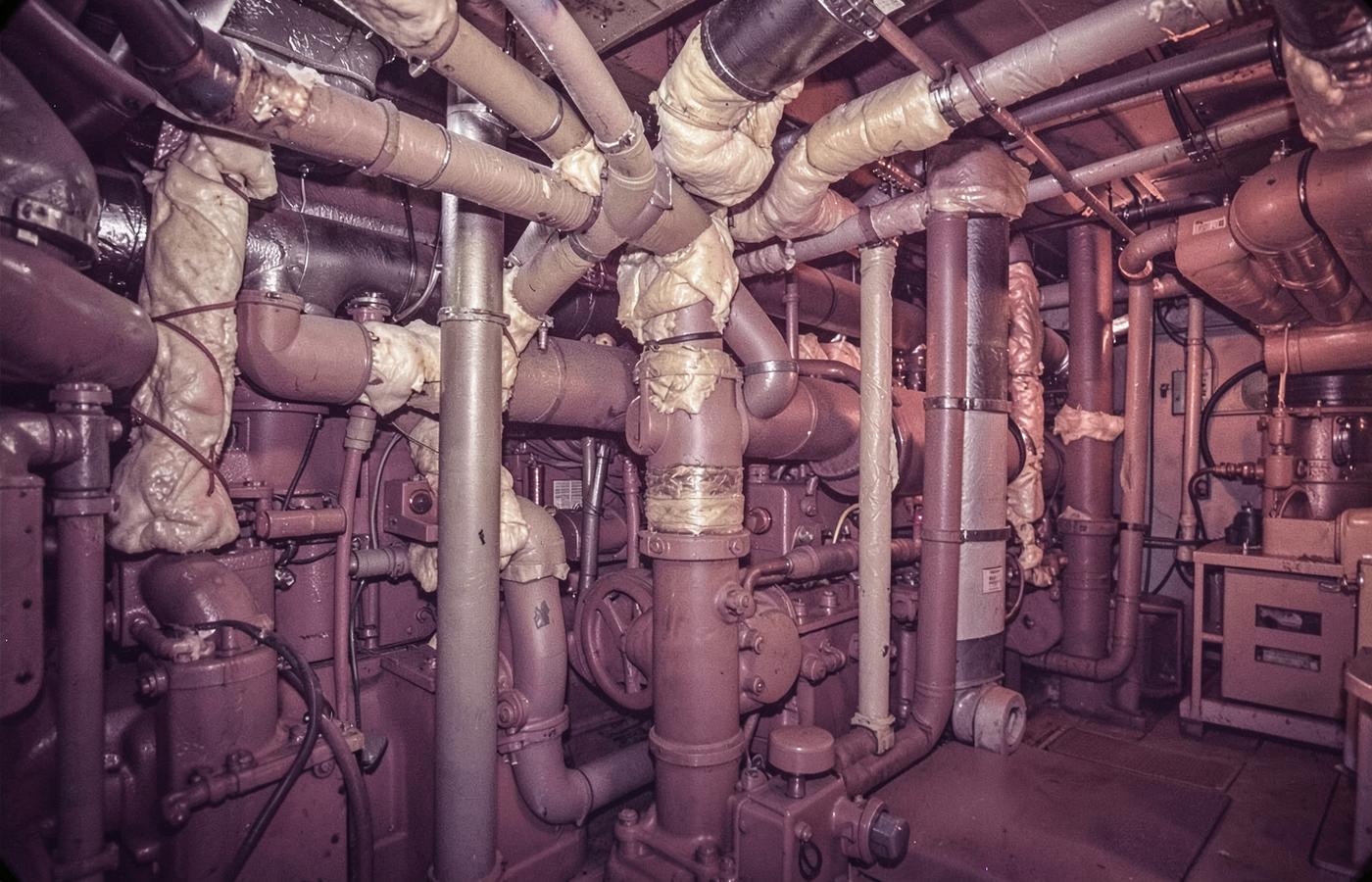
Engine rooms, boiler rooms and shipboard insulation made Navy service the single highest-risk occupational setting.
- Highest risk period
- Before 1982
- Typical latency
- 20–50 years after exposure
Sailors who served on Navy ships in the middle of the last century lived and worked inside steel hulls packed with heat-producing machinery. Boilers, turbines, evaporators and miles of steam piping all needed insulation that would not burn at sea, and asbestos was the standard answer. Machinist's mates, boiler technicians, firemen and damage controlmen worked closest to it, but crew in berthing spaces near insulated lines could breathe the same dust.
How asbestos became part of the job
The Navy specified asbestos insulation for shipboard steam systems for decades because a fire at sea can be catastrophic. Ships built during and after World War II carried asbestos in pipe lagging, boiler casings, valve packing, gaskets and even deck tile. Everyday maintenance disturbed it: crews tore off old lagging to reach a leaking valve, then mixed fresh insulating cement by hand to patch it. Overhauls in port were worse, with shipyard workers and sailors stripping whole compartments at once. Ventilation below decks was limited, so dust hung in the air and settled on bunks and clothing. The Navy phased asbestos out gradually, but older ships stayed in service for years afterward, which is why veterans who served well into later decades can still have significant exposure histories.
Materials
Asbestos products this trade handled
The product types that come up most often when this work history is reviewed.
Steam pipe lagging
Molded pipe covering wrapped around steam and hot-water lines throughout engine rooms and passageways, often painted over so sailors did not realize what it was.
Boiler insulation and refractory
Blocks, blankets and cement used on boiler casings and fireboxes, repaired often because of constant heat, vibration and salt air.
Valve packing and flange gaskets
Compressed sheet and braided packing that had to be scraped and cut out whenever a pump or valve was rebuilt.
Insulating cement
Dry powder mixed with water in buckets to patch lagging and cover joints, creating clouds of dust during mixing.
Deck tile and adhesives
Resilient floor tile and mastic used in living and working spaces, disturbed during repairs and refitting of compartments.
On the job
Tasks that put fibers in the air
Exposure usually came from ordinary, repeated work rather than one event.
Repairing leaking steam valves
Sailors cut away insulation around the valve, removed old packing and gaskets, then re-lagged the area with fresh cement in a confined space.
Cleaning and maintaining boilers
Boiler technicians worked inside and around fireboxes where refractory and insulation broke down from heat and released fine dust.
Standing watch in engine rooms
Even sailors who never touched insulation spent long watches breathing air filled with fibers loosened by vibration and nearby repairs.
Shipyard overhaul periods
During refits, crews often stayed aboard while whole spaces were stripped, sanded and reinsulated around them.
Evidence
Records that prove this kind of exposure
Decades later, these are the sources that usually rebuild the history.
| Record | Why it helps |
|---|---|
| DD-214 separation papers | Shows branch, dates of service and rating, which are the starting point for any Navy exposure claim. |
| Service record and ship assignments | Lists the specific ships and dates, so the equipment and insulation aboard each vessel can be researched. |
| Shipmate statements | Former crew can describe the spaces you worked in and the insulation work that happened around you. |
| Ship histories and deck logs | Record overhauls, shipyard periods and repairs that point to heavy exposure during particular months. |
Where this work was common
Local guides for this trade
Cities whose shipyards, plants and job sites employed this trade in large numbers.
Questions
FAQs for navy veterans
Further reading
Explainers for this work history
Related trades
Other occupations with similar exposure
Find out in minutes whether a claim is still available
Free, confidential case review for patients and families in all 50 states.