Occupation guide
Electricians and asbestos exposure
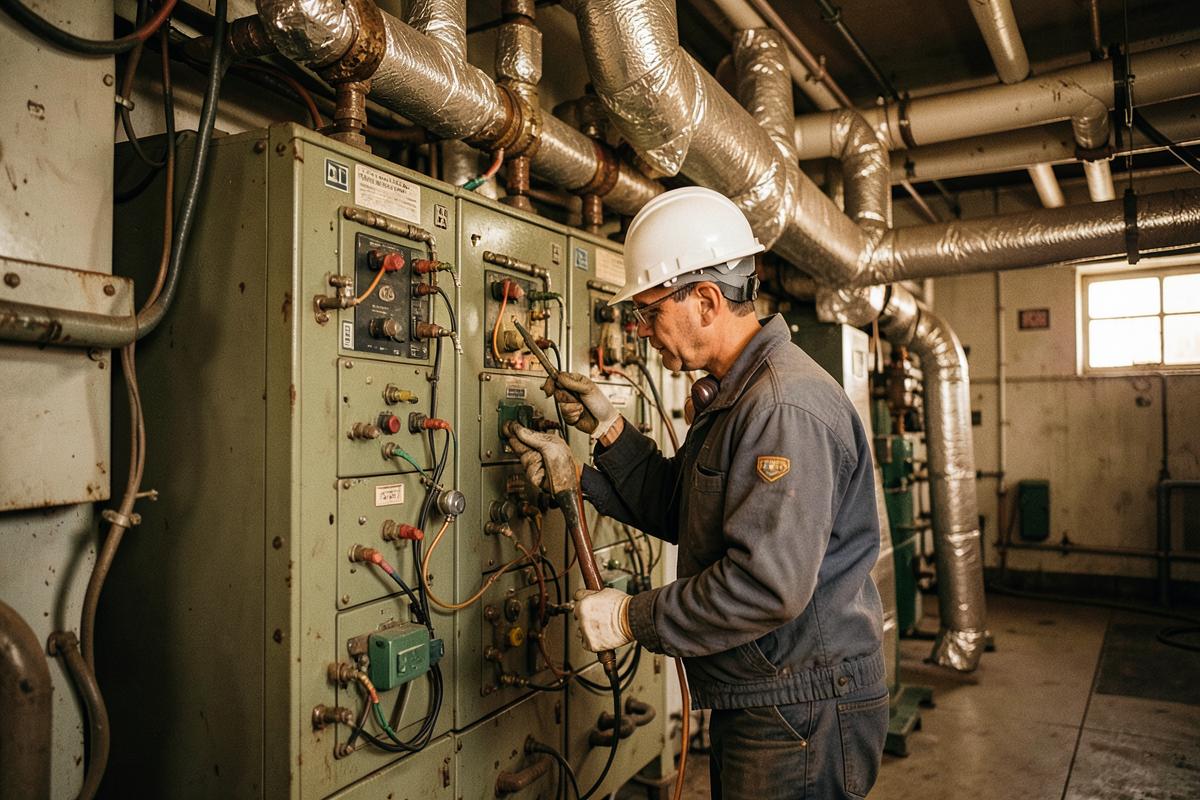
Drilling through asbestos board and working near insulated pipe runs created steady exposure.
- Highest risk period
- Before 1982
- Typical latency
- 20–50 years after exposure
Electricians wire buildings, plants and ships, which puts them in ceilings, walls, crawl spaces and mechanical rooms throughout a structure. In older construction, those spaces were full of asbestos. Electricians rarely installed insulation themselves, but drilling, cutting and pulling wire through asbestos-containing materials, and working near insulated pipes, gave many of them real exposure. Industrial electricians who worked plant outages and shipyard electricians who wired new vessels often had the heaviest exposure in the trade.
How asbestos became part of the job
Electrical work intersected with asbestos in two ways. First, some electrical materials themselves contained it, including certain wire insulation, arc chutes in switchgear, electrical panels and fireproof boards used behind equipment. Second, electricians spent their days threading conduit and cable through spaces that other trades had insulated or fireproofed with asbestos. Running a new circuit might mean drilling through asbestos board, cutting a path through sprayed fireproofing, or working above ceilings that shed dust. On industrial jobs, electricians often shared space with insulators and pipefitters during construction and outages. Renovation work in later years brought them into contact with aging materials that crumbled easily. Their exposure was often intermittent rather than constant, but it could continue across an entire career.
Materials
Asbestos products this trade handled
The product types that come up most often when this work history is reviewed.
Electrical panel boards
Fire-resistant boards mounted behind or inside panels and switchgear, drilled and cut to mount breakers and equipment.
Arc chutes and switchgear parts
Components inside large breakers designed to contain electrical arcs, which could wear and shed material during maintenance.
Wire and cable insulation
Some older heat-resistant wiring used asbestos in its covering, stripped by hand during connections.
Spray-on fireproofing
Coating on structural steel that electricians disturbed when hanging conduit, hangers and cable trays.
Ceiling tiles and joint compound
Materials electricians cut and moved while installing fixtures and pulling wire through ceilings and walls.
On the job
Tasks that put fibers in the air
Exposure usually came from ordinary, repeated work rather than one event.
Drilling through fire-resistant board
Making holes for conduit and mounting hardware turned asbestos board into dust directly in front of the electrician.
Pulling wire above ceilings
Moving tiles and working through fireproofed spaces dislodged settled dust that fell onto the worker.
Servicing old switchgear
Cleaning and replacing worn breaker components could disturb asbestos-containing parts inside the enclosure.
Working beside insulation crews
During construction and plant outages, electricians breathed dust from pipe covering being cut or removed nearby.
Evidence
Records that prove this kind of exposure
Decades later, these are the sources that usually rebuild the history.
| Record | Why it helps |
|---|---|
| IBEW local records | Confirm your membership, classification and the contractors you worked for through the hall. |
| Project and building lists | The age and type of each building helps show which asbestos materials were likely present. |
| Statements from other trades | Insulators and fitters who worked the same jobs can confirm what was being done around you. |
| Employer and payroll history | Establishes the timeline of your work, especially on large industrial projects. |
Where this work was common
Local guides for this trade
Cities whose shipyards, plants and job sites employed this trade in large numbers.
Questions
FAQs for electricians
Further reading
Explainers for this work history
Related trades
Other occupations with similar exposure
Find out in minutes whether a claim is still available
Free, confidential case review for patients and families in all 50 states.