Where it begins
- Pleura around the lungs
- Peritoneum in the abdomen
- Pericardium around the heart
- Tunica vaginalis around the testes
Free, confidential case reviews for patients and families in all 50 states
Diagnosis & treatment
Mesothelioma is a rare cancer of the thin lining around the lungs, abdomen, heart or testes, most often caused by asbestos exposure decades earlier.
Mesothelioma is a cancer that grows in the mesothelium, a thin protective layer of cells that lines several body cavities and helps organs move smoothly against each other. It is uncommon, which means many people have never heard the word until they or someone they love is diagnosed. This guide gives a clear starting picture: where the disease forms, how it is different from other cancers, why asbestos is so closely linked to it, and what usually happens in the first weeks after it is suspected.
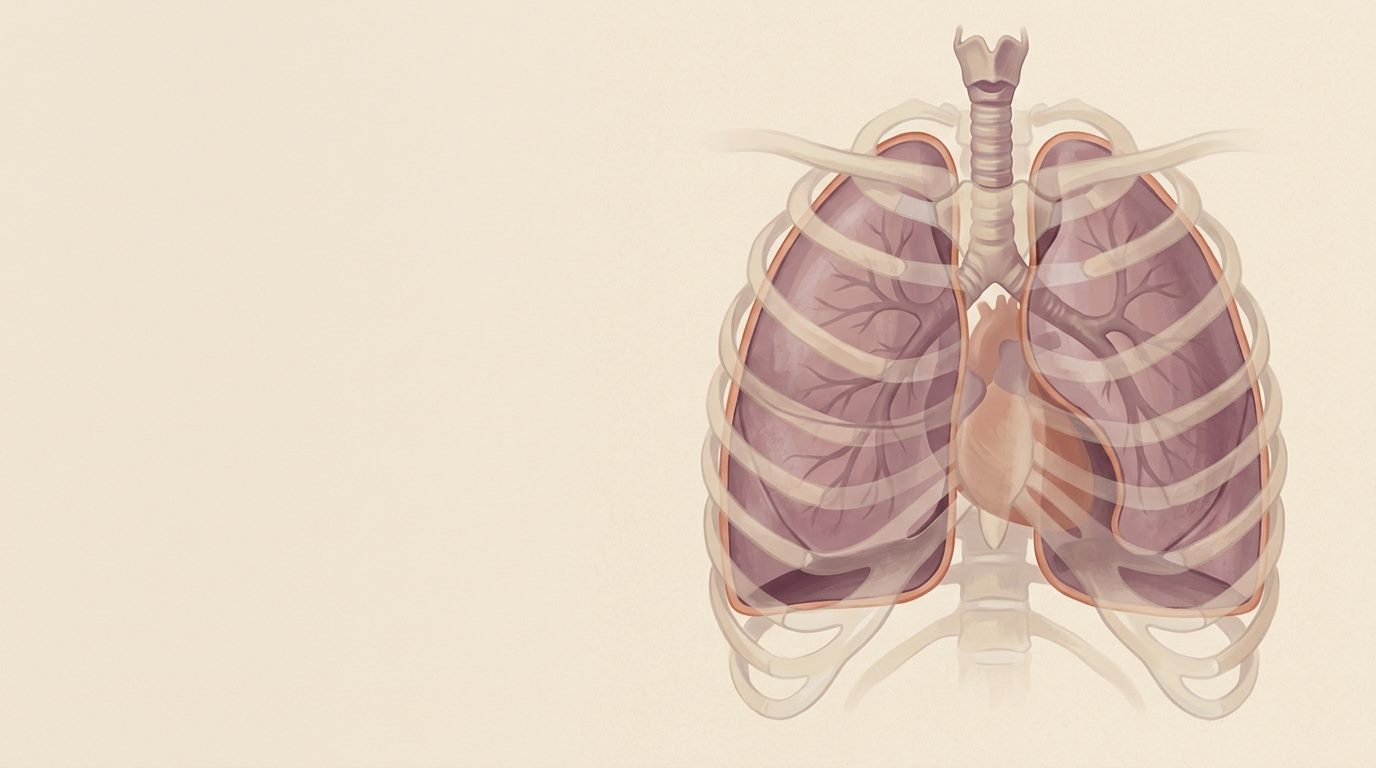
The mesothelium is a single sheet of cells that forms smooth, slippery linings. Around the lungs it is called the pleura, in the abdomen the peritoneum, around the heart the pericardium, and around the testicles the tunica vaginalis. These linings produce a small amount of fluid that lets organs glide as you breathe, digest and move. When mesothelioma develops, abnormal cells multiply along these surfaces, thickening the lining and often causing extra fluid to collect. The disease is named after the lining it affects, so pleural mesothelioma starts around the lungs and peritoneal mesothelioma starts in the abdomen. Where the cancer begins shapes the symptoms, the tests used to find it and the treatments doctors consider.
Because pleural mesothelioma affects the chest, people often assume it is a type of lung cancer. It is not. Lung cancer begins in the airways or lung tissue and usually forms a distinct mass. Mesothelioma begins in the lining outside the lung and tends to spread across that surface like a sheet. The two cancers carry different markers under the microscope, which is how pathologists tell them apart. They also follow different treatment approaches, and mesothelioma is best managed by teams who see it regularly. Asbestos can contribute to both diseases, and smoking greatly raises lung cancer risk in people exposed to asbestos, but smoking is not considered a cause of mesothelioma itself. Knowing the difference helps you find the right specialists.
Asbestos is a group of natural minerals made of tiny fibers. For much of the twentieth century it was prized because it resists heat and fire, and it was added to insulation, cement, gaskets, brakes, flooring and many other products. When those materials were cut, sanded, installed or torn out, fibers floated into the air and could be breathed in or swallowed. Some fibers lodge in the linings of the body and stay there for decades, causing ongoing irritation and cell damage that can eventually lead to cancer. Most people with mesothelioma have a history of asbestos exposure, often at work, in military service or through family members who brought dust home. A small number of cases have no source that can be identified.
One of the most confusing parts of mesothelioma is the long gap between exposure and illness. The disease usually appears twenty to fifty years after asbestos was first inhaled, so many people are diagnosed in their sixties, seventies or later, long after they left the job or service where exposure happened. Some have forgotten the work entirely, or never knew the materials around them contained asbestos. This delay is also why the disease is rarely caught early. The linings can change slowly for years without causing symptoms. When symptoms do appear, they are often mild at first. Thinking back over your full work, military and home history can help doctors understand your risk, even if the exposure seems very distant.
When a scan or fluid test raises the possibility of mesothelioma, the next steps usually move in a set order. Doctors arrange a biopsy to collect tissue, and a pathologist examines it with special stains to confirm the diagnosis and name the cell type. Staging scans such as CT and PET-CT show how far the disease has spread. Many patients then seek review at a center experienced with mesothelioma, where a team of specialists plans treatment together. Early on, it also helps to gather records, including pathology and imaging reports, and to write down your work and military history. Because legal deadlines are often tied to the diagnosis date, noting when the diagnosis was confirmed is useful for later planning.
Quick reference
Useful to print or bring to an appointment.
Questions
Related
Free, confidential case review for patients and families in all 50 states.