Occupation guide
Shipyard Workers and asbestos exposure
Building and overhauling ships meant cutting, mixing and stripping asbestos insulation in confined spaces.
- Highest risk period
- Before 1982
- Typical latency
- 20–50 years after exposure
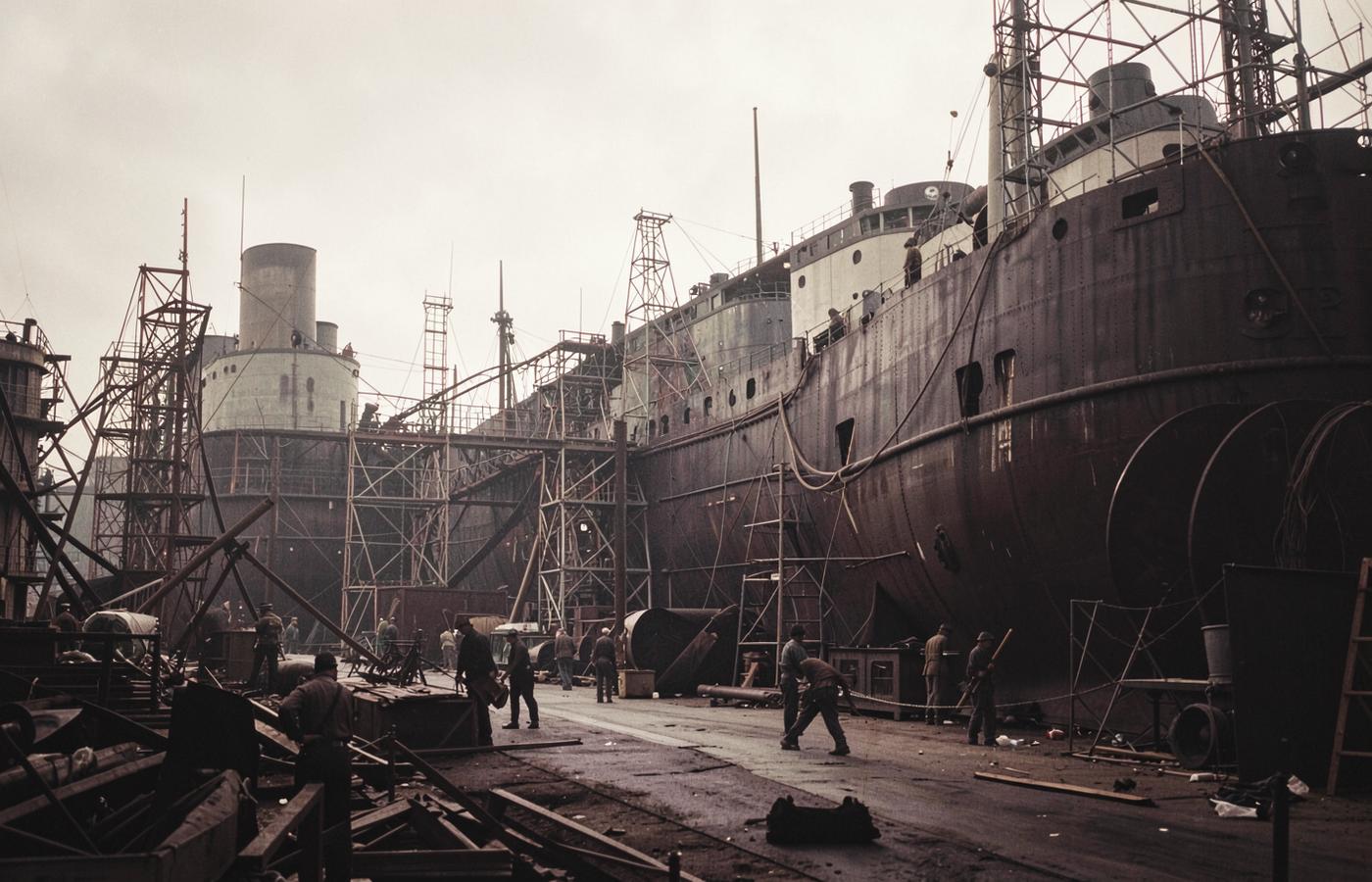
Shipyard workers built, repaired and scrapped the same vessels that sailors served on, often in the most dust-heavy phases of a ship's life. Shipfitters, welders, pipefitters, insulators, electricians and laborers worked side by side in hulls under construction. When insulators cut and fitted asbestos covering, everyone nearby breathed it, including trades that never handled the material themselves. Laborers who swept compartments and carried debris off the ship faced the same dust, often for years at a single yard.
How asbestos became part of the job
Commercial and naval shipyards were among the largest users of asbestos in the country, especially during the wartime building surges and the decades of repair work that followed. New construction required insulating every steam line, boiler and bulkhead, and overhauls required ripping out old insulation first. Work happened in cramped compartments with poor airflow, and it was common for several crafts to share one space during a shift. Sweeping and blowing debris with compressed air spread fibers further. Many yards kept using asbestos products well after concerns became known because ship specifications still called for them. Later, as older ships were modernized or broken up, workers stripped decades of accumulated insulation. That long history means yard workers from many different eras and trades can have heavy exposure.
Materials
Asbestos products this trade handled
The product types that come up most often when this work history is reviewed.
Pipe covering and block insulation
Cut to length on the spot with hand saws and knives, then fitted around piping and machinery inside hulls under construction.
Insulating and finishing cements
Mixed by the bucket to seal joints and cover irregular shapes, releasing dust every time a new batch was prepared.
Bulkhead and fire-resistant panels
Board products installed in compartments for fire protection and cut or drilled to fit wiring and piping.
Gaskets and packing
Used on thousands of flanges and pumps in every ship and replaced during overhaul, usually by scraping and wire brushing.
Welding blankets and cloth
Asbestos textiles laid over surfaces to protect them from sparks and heat, shedding fibers as they wore out.
On the job
Tasks that put fibers in the air
Exposure usually came from ordinary, repeated work rather than one event.
Ripping out old insulation
Overhaul crews tore brittle lagging off pipes and machinery by hand, filling compartments with dust that other trades then worked in.
Fitting new pipe covering
Sections were measured, sawed and shaped on site, and scraps and dust piled up on decks around the work.
Sweeping and cleanup
Laborers swept and shoveled insulation debris at the end of shifts, often with brooms that sent fibers back into the air.
Working in shared compartments
Welders, electricians and fitters often worked beside insulators, breathing the same dust without handling asbestos themselves.
Evidence
Records that prove this kind of exposure
Decades later, these are the sources that usually rebuild the history.
| Record | Why it helps |
|---|---|
| Yard employment and payroll records | Confirm which shipyard employed you, your craft and the years you worked there. |
| Hull numbers and ship names | Link your work to particular vessels, whose specifications can show which insulation products were installed. |
| Union membership records | Show your trade and local, which helps reconstruct assignments when company records are incomplete. |
| Coworker testimony | People who worked the same hulls can confirm the products used and the dusty conditions you faced. |
Where this work was common
Local guides for this trade
Cities whose shipyards, plants and job sites employed this trade in large numbers.
Questions
FAQs for shipyard workers
Further reading
Explainers for this work history
Related trades
Other occupations with similar exposure
Find out in minutes whether a claim is still available
Free, confidential case review for patients and families in all 50 states.