Occupation guide
Pipefitters and Steamfitters and asbestos exposure
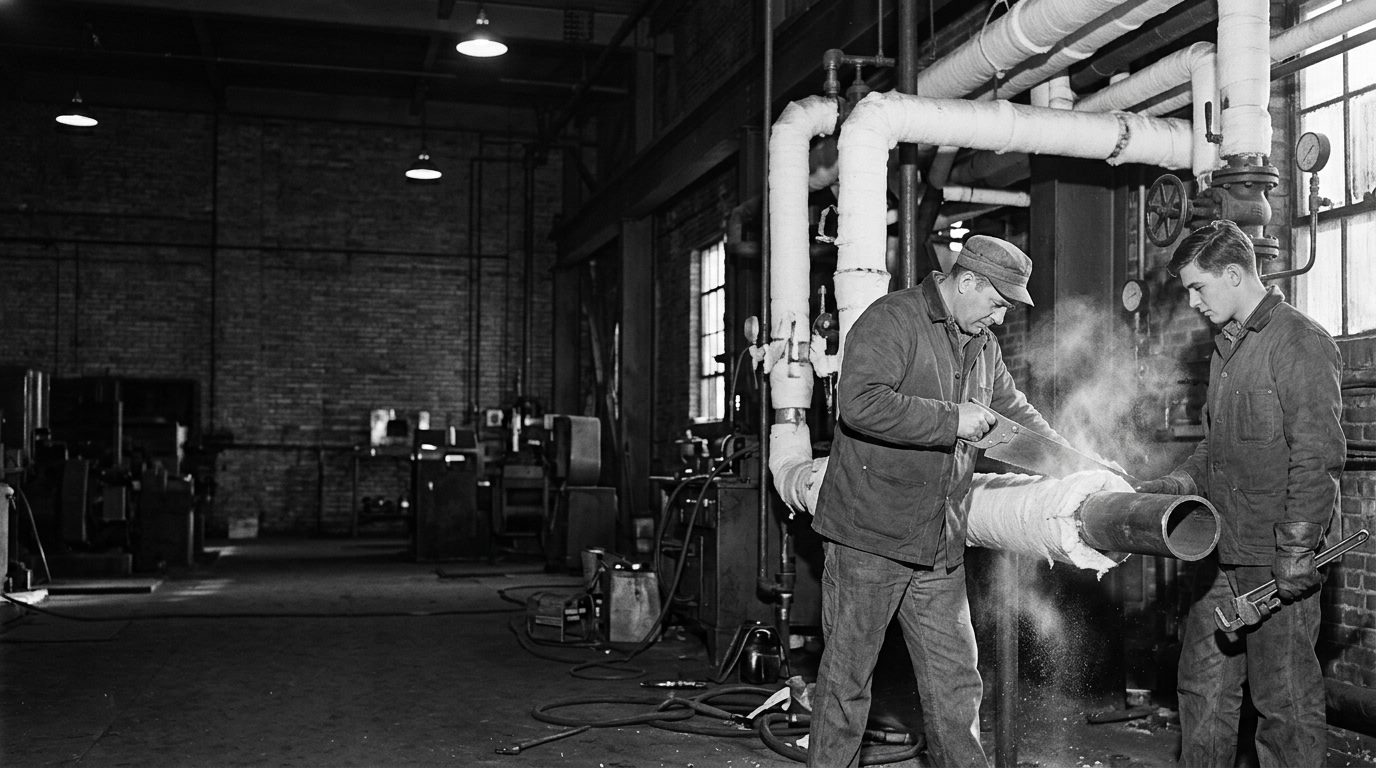
Cutting asbestos pipe covering released fibers directly into the breathing zone.
- Highest risk period
- Before 1982
- Typical latency
- 20–50 years after exposure
Pipefitters and steamfitters assemble and maintain the piping systems that carry steam, water, fuel and chemicals through industrial plants, ships and large buildings. Those systems ran hot, and for decades the insulation around them and the gaskets inside them contained asbestos. Every time a pipefitter opened a line, replaced a valve or cut into covered pipe, fibers could be released. Steamfitters on maintenance crews often repeated this work weekly for years.
How asbestos became part of the job
Steam systems were at the heart of industry for much of the last century, and pipefitters kept them running. Asbestos appeared throughout their work: in the covering wrapped around pipes, in the gaskets sealing flanges, in valve and pump packing, and in joint compounds. Pipefitters often had to remove insulation before they could reach the pipe, then worked beside insulators who re-covered it afterward. Scraping hardened gaskets off flange faces with wire brushes and grinders was routine and especially dusty. The trade worked in refineries, power plants, chemical facilities, shipyards and commercial construction, often through union dispatch that moved workers between many sites. Because gaskets and packing kept containing asbestos for longer than some other products, pipefitters could face exposure across a long span of years.
Materials
Asbestos products this trade handled
The product types that come up most often when this work history is reviewed.
Flange gaskets
Compressed sheet gaskets cut to fit pipe flanges and scraped off with brushes or grinders when lines were opened.
Valve and pump packing
Braided asbestos packing wound around valve stems and pump shafts, dug out with hooks during repacking.
Pipe insulation
Covering on steam and process lines that had to be cut away before pipe could be repaired or replaced.
Joint and thread compounds
Sealants used on threaded connections, some of which contained asbestos fibers in older formulations.
Insulated valves and fittings
Valve bodies and fittings wrapped in asbestos cement that crumbled when fitters worked on them.
On the job
Tasks that put fibers in the air
Exposure usually came from ordinary, repeated work rather than one event.
Scraping old gaskets from flanges
Wire brushing and grinding baked-on gasket material released fine fibers right at the fitter's face.
Repacking valves and pumps
Pulling out old packing and cutting new rings from coils shed fibers each time a component was serviced.
Cutting into insulated pipe
Removing covering to reach a leak or tie in a new line broke insulation apart in the immediate work area.
Fabricating gaskets on site
Cutting custom gaskets from asbestos sheet with knives and punches created dust on benches and floors.
Evidence
Records that prove this kind of exposure
Decades later, these are the sources that usually rebuild the history.
| Record | Why it helps |
|---|---|
| UA local membership and dispatch records | Show your trade classification and the contractors and plants where you were sent to work. |
| Plant turnaround and outage records | Identify major maintenance periods when gasket and insulation work was concentrated. |
| Gasket and packing brand recollections | Brands you remember cutting or installing can connect your claim to specific manufacturers and trusts. |
| Foremen and coworker statements | People who ran or shared your crews can confirm the systems you worked on and the conditions. |
Where this work was common
Local guides for this trade
Cities whose shipyards, plants and job sites employed this trade in large numbers.
Questions
FAQs for pipefitters and steamfitters
Further reading
Explainers for this work history
Related trades
Other occupations with similar exposure
Find out in minutes whether a claim is still available
Free, confidential case review for patients and families in all 50 states.