Occupation guide
Millwrights and asbestos exposure
Machinery packing and gaskets in mills and plants commonly contained asbestos.
- Highest risk period
- Before 1982
- Typical latency
- 20–50 years after exposure
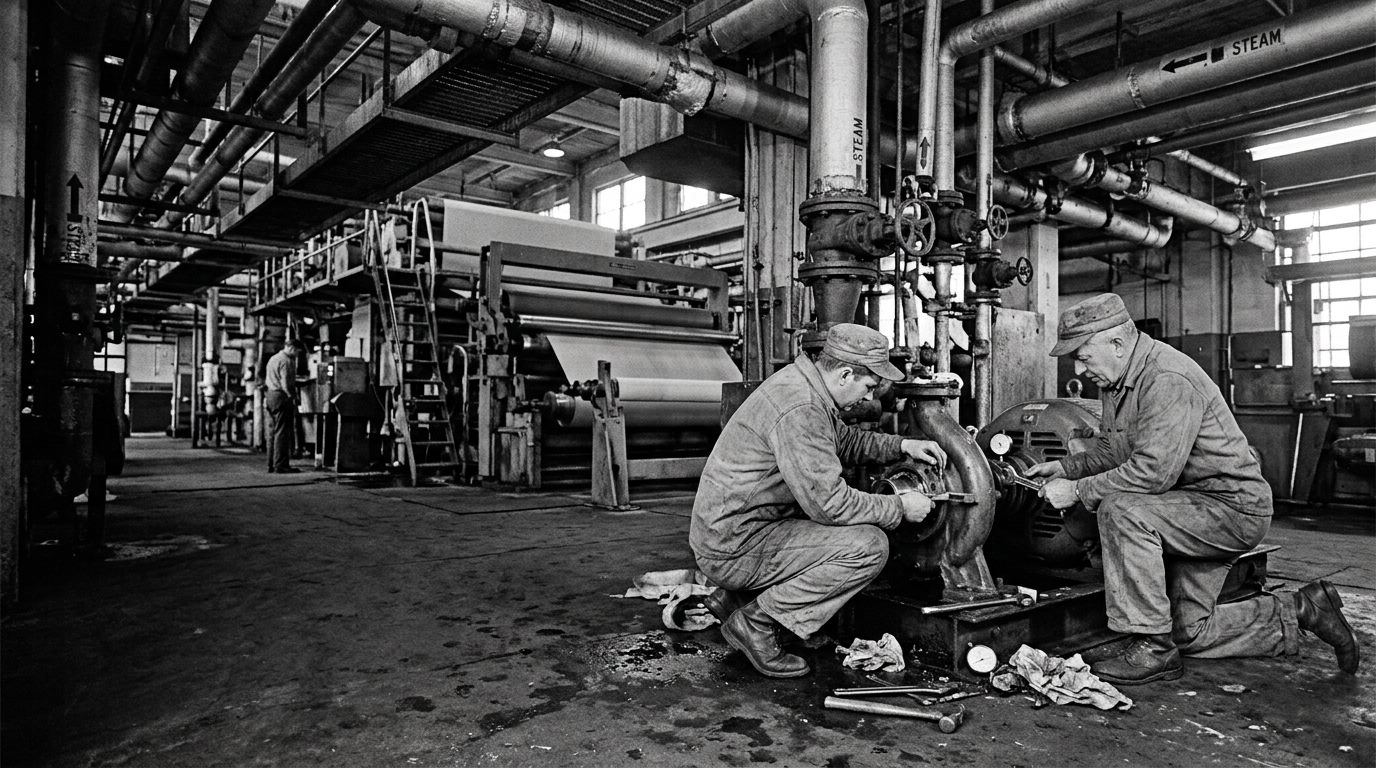
Millwrights install, align and repair the heavy machinery that keeps mills and factories running: pumps, turbines, compressors, conveyors and gearboxes. Much of that equipment used asbestos gaskets, packing and insulation. Millwrights routinely opened machines, replaced seals and worked around hot equipment, so they often handled these parts directly during both installation and maintenance. Their work often happened during shutdowns, when many machines were opened at once and dust came from several crafts working nearby.
How asbestos became part of the job
Millwright work centered on rotating and moving machinery, and for decades that machinery relied on asbestos components to handle heat and friction. Pump seals and valve stems were packed with asbestos rope, flanged housings used asbestos sheet gaskets, and nearby steam lines were covered in asbestos insulation. In paper mills, steel mills, power plants and auto factories, millwrights were often called in during shutdowns, when many machines were opened at once and several crafts worked in the same area. Brake and clutch assemblies on cranes and heavy equipment could also contain asbestos. Much of the work was done with hand tools and grinders in noisy, dusty environments, and cleanup was usually done with brooms or compressed air. That combination meant exposure from both the millwright's own tasks and the surrounding activity.
Materials
Asbestos products this trade handled
The product types that come up most often when this work history is reviewed.
Pump and shaft packing
Braided asbestos rope wound around rotating shafts, pulled out and replaced whenever a pump started leaking.
Machinery gaskets
Sheet gaskets on housings, covers and flanges that had to be scraped off before reassembly.
Crane and hoist brakes
Friction linings on overhead cranes and hoists that wore down and released dust during inspection and replacement.
Turbine and dryer insulation
Covering on hot equipment that millwrights removed to align, repair or replace machinery.
Clutch facings
Friction materials in industrial drives that produced dust when worn parts were serviced or blown clean.
On the job
Tasks that put fibers in the air
Exposure usually came from ordinary, repeated work rather than one event.
Repacking pumps and valves
Digging out hardened packing with hooks and cutting new rings from coils released fibers during every service.
Rebuilding machine housings
Scraping and wire brushing old gaskets from mating surfaces sent fine dust into the air around the machine.
Working shutdown maintenance
Multiple crafts tore into equipment at the same time, filling the area with dust from many sources.
Blowing out equipment
Using compressed air to clean brake and clutch housings scattered accumulated friction dust across the work area.
Evidence
Records that prove this kind of exposure
Decades later, these are the sources that usually rebuild the history.
| Record | Why it helps |
|---|---|
| Millwright union or plant seniority records | Show your classification, employer and years, often including which departments you served. |
| Equipment manufacturer names | Pumps, turbines and cranes you maintained can point to the gaskets and packing supplied with them. |
| Shutdown and maintenance schedules | Help identify periods of concentrated repair work when exposure was heaviest. |
| Statements from maintenance crews | Coworkers can describe the parts you replaced and how dusty the work was. |
Where this work was common
Local guides for this trade
Cities whose shipyards, plants and job sites employed this trade in large numbers.
Questions
FAQs for millwrights
Further reading
Explainers for this work history
Related trades
Other occupations with similar exposure
Find out in minutes whether a claim is still available
Free, confidential case review for patients and families in all 50 states.