Occupation guide
Plumbers and asbestos exposure
Asbestos gaskets, joint compound and pipe lagging were part of routine plumbing work.
- Highest risk period
- Before 1982
- Typical latency
- 20–50 years after exposure
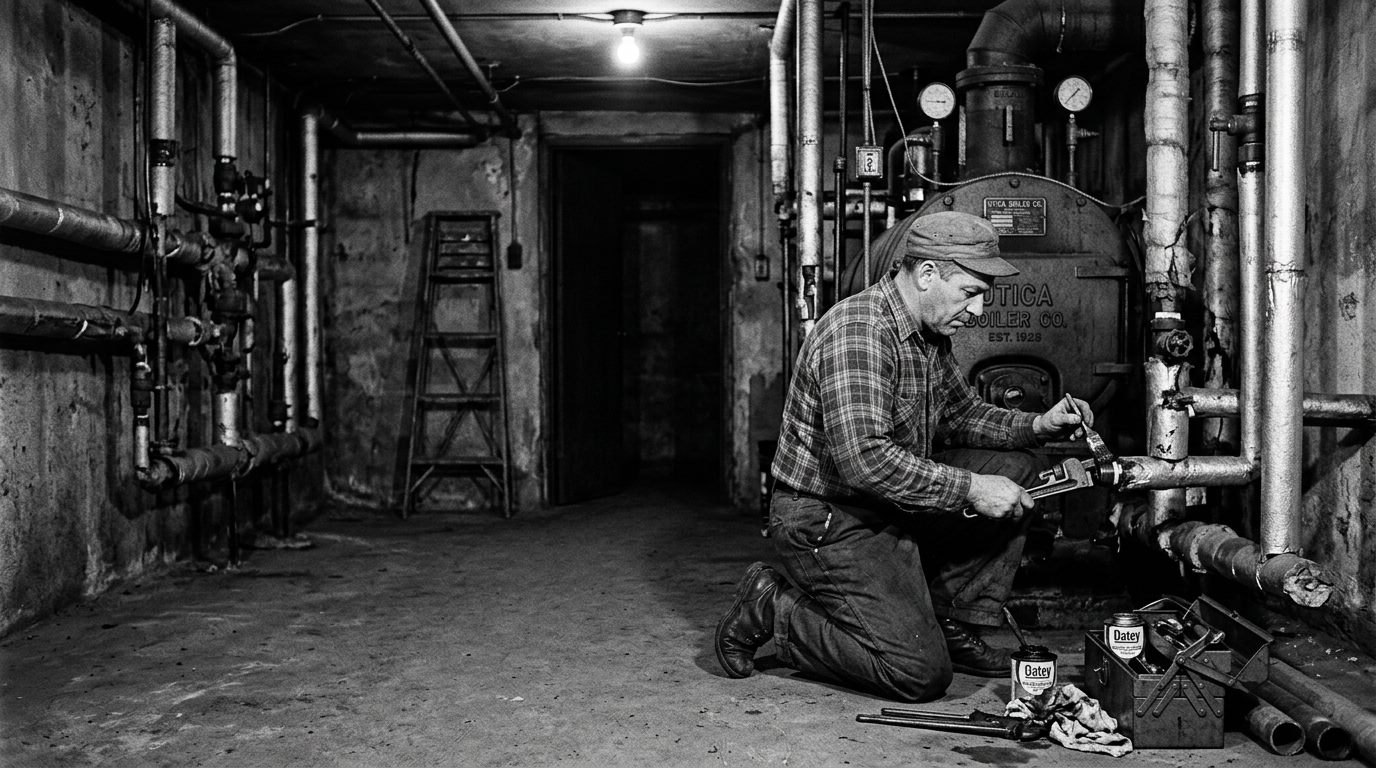
Plumbers install and repair the water, drain, gas and heating lines in homes, schools, hospitals and commercial buildings. Before the 1980s, plumbing work frequently involved asbestos in pipe insulation, joint compounds, gaskets and cement pipe. Plumbers often worked in basements, boiler rooms and crawl spaces where these materials were common and airflow was poor. Apprentices frequently did the dirtiest removal work, so exposure often started in the first years on the job.
How asbestos became part of the job
Plumbers crossed paths with asbestos most often around heating systems and older piping. Hot-water and steam lines in basements were commonly wrapped in asbestos covering that had to be cut away to make repairs. Some plumbing jobs used asbestos-cement pipe for water mains and drains, which had to be cut to length. Gaskets on boilers and water heaters, pipe joint compounds and the insulation on nearby boilers added further exposure. Because plumbers worked in both new construction and repair, they encountered fresh products as well as crumbling old ones. Residential plumbers could be exposed in dozens of homes a month, while commercial and industrial plumbers worked in large mechanical rooms beside other trades. That variety means a plumber's exposure history often spans many small jobs rather than one large site.
Materials
Asbestos products this trade handled
The product types that come up most often when this work history is reviewed.
Asbestos-cement pipe
Rigid pipe used for water mains, drains and vents, cut with saws that produced dust when shortening or tapping sections.
Hot-water pipe insulation
Covering on heating and hot-water lines in basements, broken away by hand to reach leaks and connections.
Boiler and water heater gaskets
Seals on heating equipment that plumbers scraped off and replaced during service calls.
Pipe joint compound
Some older sealants applied to threaded joints contained asbestos and were mixed or wiped by hand.
Furnace and boiler cement
Patching compounds used around heating equipment, applied and chipped away during repairs.
On the job
Tasks that put fibers in the air
Exposure usually came from ordinary, repeated work rather than one event.
Cutting asbestos-cement pipe
Sawing or snapping cement pipe to length released fibers at the cut, often in trenches or tight basements.
Repairing insulated heating lines
Tearing insulation off old pipes to fix leaks crumbled the covering onto floors and the plumber's clothes.
Servicing boilers and heaters
Replacing gaskets and seals meant scraping residue and working near boiler insulation in enclosed rooms.
Basement and crawl space work
Low, closed spaces with aging insulation kept disturbed dust close to the worker for the whole job.
Evidence
Records that prove this kind of exposure
Decades later, these are the sources that usually rebuild the history.
| Record | Why it helps |
|---|---|
| Plumbing contractor employment records | Show which companies you worked for and the type of work they did during each period. |
| UA local or licensing records | Confirm your trade status and years of work, useful when employer records are gone. |
| Lists of major projects | Large jobs such as schools or hospitals can be researched for the materials installed. |
| Coworker or apprentice statements | People who worked beside you can describe the pipe, insulation and compounds you handled. |
Where this work was common
Local guides for this trade
Cities whose shipyards, plants and job sites employed this trade in large numbers.
Questions
FAQs for plumbers
Further reading
Explainers for this work history
Related trades
Other occupations with similar exposure
Find out in minutes whether a claim is still available
Free, confidential case review for patients and families in all 50 states.