Occupation guide
Machinists and asbestos exposure
Gaskets, packing and brake components released fibers during grinding and removal.
- Highest risk period
- Before 1982
- Typical latency
- 20–50 years after exposure
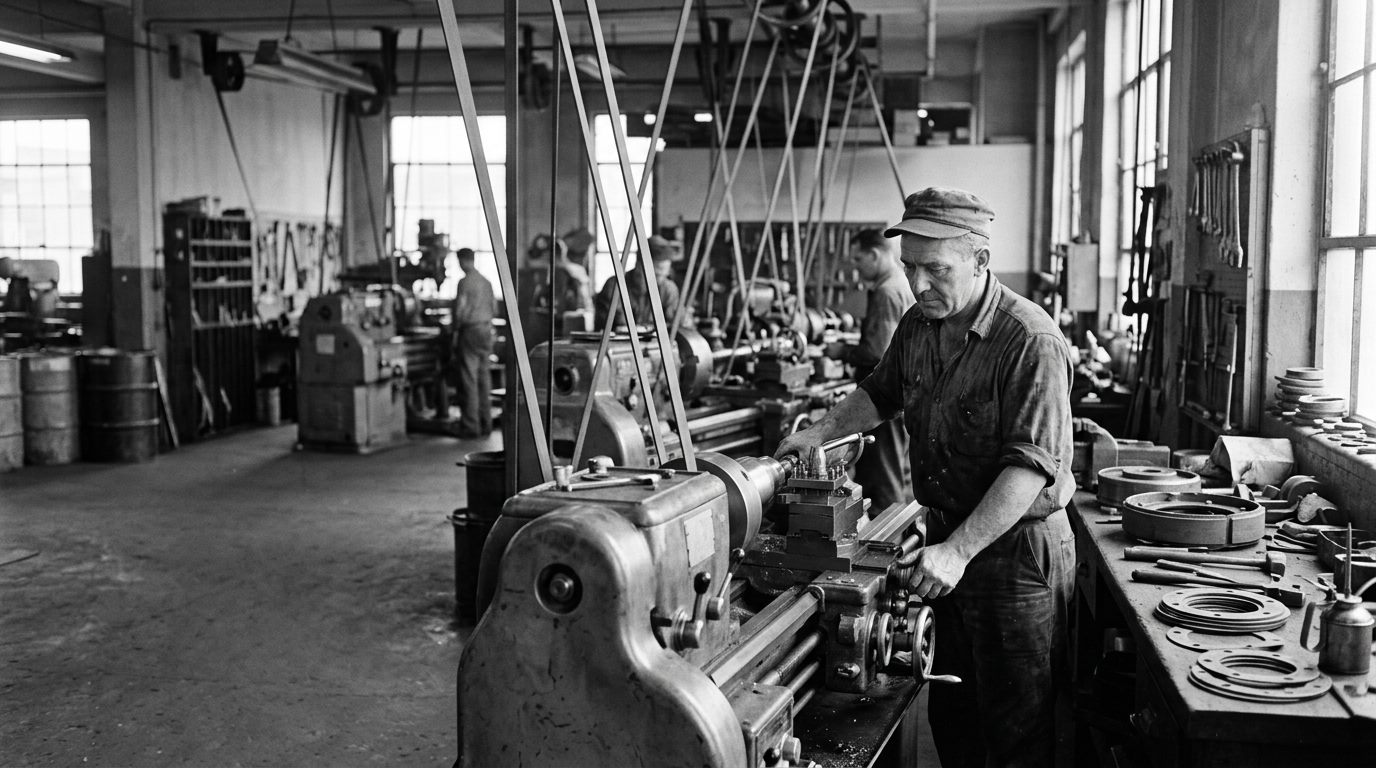
Machinists shape and finish metal parts on lathes, mills and grinders, and many also repaired equipment in plants, rail shops and shipyards. Asbestos entered their work through the gaskets, packing, brake parts and insulation on the machines and components they handled. Grinding, drilling and cleaning those parts could release fibers right at the machinist's bench. Machinists in rail shops, shipyards and plant maintenance departments often saw the most asbestos because they rebuilt used equipment rather than making new parts.
How asbestos became part of the job
Machinists often worked on parts that other people took out of service: pump housings with gaskets still attached, valves with packing, brake and clutch components, and insulated equipment. Before a part could be machined, old sealing materials had to be scraped, ground or blown off. In some shops, machinists also cut gaskets from asbestos sheet or worked with asbestos-containing friction materials. Navy machinist's mates and shipyard machinists spent time in engine rooms where insulated steam systems surrounded the equipment. Machine shops were often dusty, and compressed air was a common way to clean parts and machines, which spread any fibers present. Because machinists were not usually thought of as asbestos workers, their exposure is sometimes overlooked, which makes describing specific tasks especially important.
Materials
Asbestos products this trade handled
The product types that come up most often when this work history is reviewed.
Gasket sheet
Asbestos-containing sheet stock that machinists cut and punched into custom gaskets for pumps, valves and engines.
Packing materials
Braided packing removed from pumps and valves brought into the shop for rebuilding.
Brake and clutch components
Friction parts machined, ground or resurfaced, producing dust at the machine.
Insulated equipment housings
Components that arrived coated with asbestos insulation or cement that had to be removed before machining.
On the job
Tasks that put fibers in the air
Exposure usually came from ordinary, repeated work rather than one event.
Cutting custom gaskets
Shearing and punching gasket sheet on the bench left fine debris on surfaces and in the air.
Cleaning parts before machining
Scraping and grinding old sealing material off flanges and faces released fibers into the shop.
Resurfacing friction components
Grinding or turning brake and clutch parts created dust that settled on machines and clothing.
Blowing down machines and parts
Compressed air cleaning scattered any asbestos dust through the shop and into the breathing zone.
Evidence
Records that prove this kind of exposure
Decades later, these are the sources that usually rebuild the history.
| Record | Why it helps |
|---|---|
| Shop or department assignment records | Show where in a plant or yard you worked, which helps identify the equipment you serviced. |
| Naval rating and ship records | For machinist's mates, identify the engine rooms and equipment tied to your service. |
| Descriptions of gasket and packing work | Explain how often you cut or removed sealing materials, a key part of machinist exposure. |
| Coworker testimony | Fellow machinists can confirm the materials and cleaning methods used in the shop. |
Where this work was common
Local guides for this trade
Cities whose shipyards, plants and job sites employed this trade in large numbers.
Questions
FAQs for machinists
Further reading
Explainers for this work history
Related trades
Other occupations with similar exposure
Find out in minutes whether a claim is still available
Free, confidential case review for patients and families in all 50 states.