Occupation guide
Welders and asbestos exposure
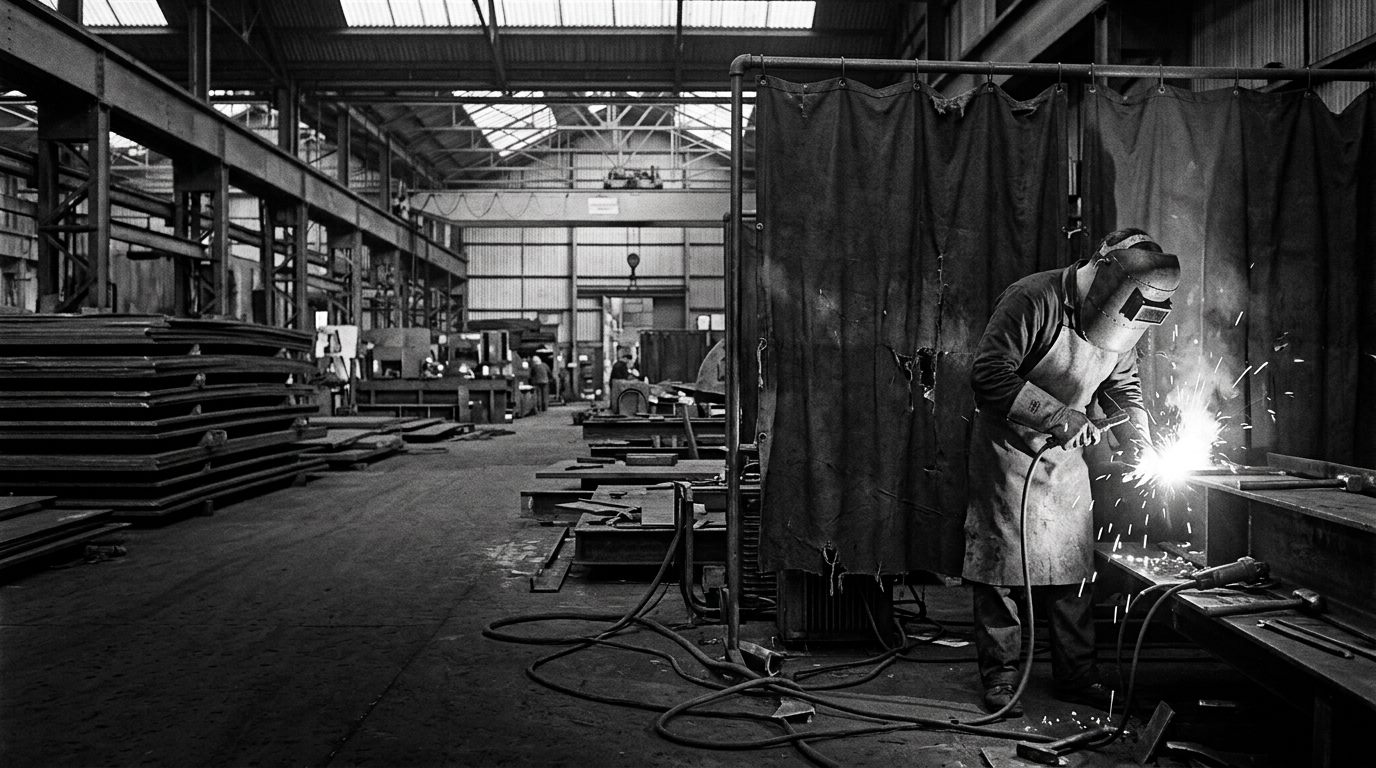
Asbestos blankets, gloves and curtains were used to shield welding heat.
- Highest risk period
- Before 1982
- Typical latency
- 20–50 years after exposure
Welders join and cut metal in shipyards, plants, construction sites and fabrication shops. Their work produces intense heat and sparks, so for decades they relied on asbestos-based protective gear to shield themselves and the surfaces around them. Welders also frequently worked on piping and equipment that was insulated with asbestos, putting them close to other trades' dust. Shipyard welders, pipeline welders and shop welders each faced different sources, so the setting of the work matters when reviewing a claim.
How asbestos became part of the job
Heat protection was the main reason asbestos showed up in welding. Welding blankets, curtains, gloves, aprons and jackets were commonly made from asbestos cloth because it would not catch fire. As that gear wore, it frayed and shed fibers, and welders shook out blankets, cut them into pieces and stuffed them around work to block sparks. Some welding rods also had coatings that have been examined for asbestos content. On top of that, welders often had to remove insulation from pipes or vessels before they could weld, or worked in compartments where insulators were busy nearby. In shipyards especially, welders spent long hours inside hulls during construction and repair. Their exposure could therefore come from their own protective equipment as well as from the environment around them.
Materials
Asbestos products this trade handled
The product types that come up most often when this work history is reviewed.
Welding blankets
Asbestos cloth draped over nearby surfaces to catch sparks and slag, shaken out and reused until they fell apart.
Welding curtains and screens
Heat shields hung around work areas, disturbed each time they were moved or folded.
Heat-resistant gloves and aprons
Protective gear made from asbestos textiles that wore thin with daily use and shed fibers onto hands and clothing.
Pipe and vessel insulation
Covering that welders stripped from joints before welding, often in cramped compartments with poor airflow.
On the job
Tasks that put fibers in the air
Exposure usually came from ordinary, repeated work rather than one event.
Setting up spark protection
Unrolling, cutting and tucking asbestos blankets around the work area released fibers before welding even began.
Cutting insulation from joints
Clearing covering from pipe ends so a weld could be made put insulation dust right at the welder's face.
Welding inside ship compartments
Long shifts in enclosed hull spaces meant breathing dust from nearby insulation work with little ventilation.
Wearing worn protective gear
Frayed gloves and aprons shed fibers throughout the day, especially when brushed off or cleaned.
Evidence
Records that prove this kind of exposure
Decades later, these are the sources that usually rebuild the history.
| Record | Why it helps |
|---|---|
| Welding certifications and training records | Confirm your trade and dates, even when employer payroll records are missing. |
| Employer and shop records | Identify where you welded and whether the work involved insulated piping or ships. |
| Descriptions of protective gear | What your blankets and gloves looked like can help show they were made from asbestos cloth. |
| Coworker statements | Other welders and fitters can confirm the gear supplied and insulation work happening nearby. |
Where this work was common
Local guides for this trade
Cities whose shipyards, plants and job sites employed this trade in large numbers.
Questions
FAQs for welders
Further reading
Explainers for this work history
Related trades
Other occupations with similar exposure
Find out in minutes whether a claim is still available
Free, confidential case review for patients and families in all 50 states.