What is covered
- Employers and job sites
- Products and tasks remembered
- Military service
- Diagnosis and impact on daily life
Free, confidential case reviews for patients and families in all 50 states
Compensation
A deposition preserves the patient's sworn account of work, products and illness, usually at home or by video and often on an expedited schedule.
A deposition is often the most important event in a mesothelioma case for the patient personally. It is the chance to tell, under oath, where you worked, what you did and what products you remember, and how the illness has changed your life. Many people feel nervous beforehand, but with preparation it is usually manageable. This guide explains the types of depositions, how to prepare, what the day looks like, how health needs are handled and what happens afterward.
In mesothelioma cases, patients may give two kinds of testimony. A discovery deposition is mainly for the defendants to learn about the claim. Their lawyers ask most of the questions, covering work history, products, medical history and other background. A preservation deposition, sometimes called a trial or de bene esse deposition, is recorded so the testimony can be shown to a jury if the patient cannot attend trial. In that session, the patient's own attorney usually asks questions first to present the story clearly, and defense lawyers then cross-examine. Because mesothelioma can progress quickly, courts often allow these depositions to happen early, and both types are frequently video-recorded. Your attorney will explain which type is planned and why.
Preparation usually involves one or more meetings with your attorney before the deposition. You will review your work history, including employers, job sites, dates, tasks and the products you remember. Looking at old pay stubs, union records, photos or service records can help jog memories. Your attorney will explain the kinds of questions defense lawyers tend to ask and the ground rules, such as waiting for each question to finish, answering only what is asked and saying clearly when you do not know or cannot remember. Guessing can cause problems later, so it is better to give honest uncertainty. You should never be told what to say, only how the process works. Ask any questions you have during preparation.
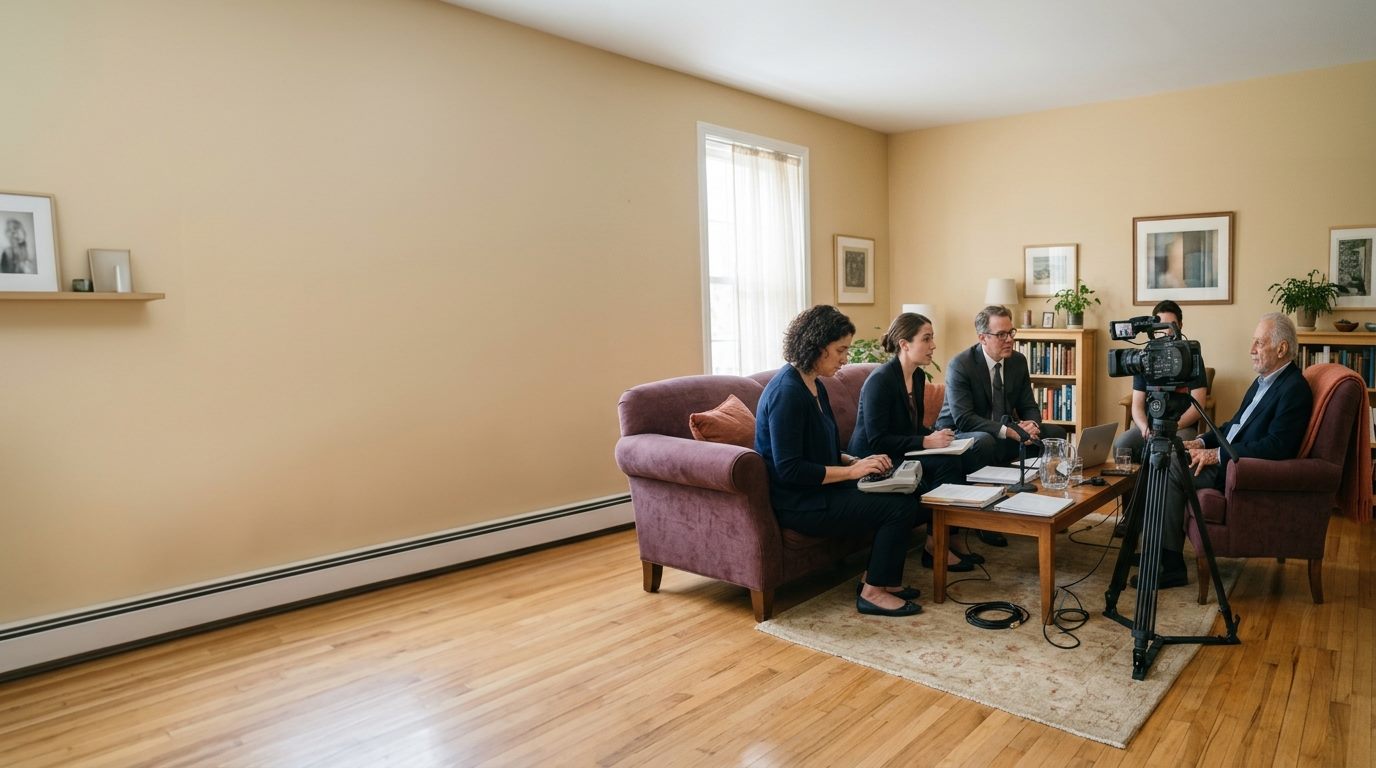
A court reporter places you under oath and records everything said, and a videographer often records the session. Your attorney sits with you throughout. Several defense lawyers may attend in person or by video, and each may ask questions. Attorneys sometimes state objections for the record, but in most cases you still answer unless your attorney tells you not to. Questions can be detailed and repetitive, especially about product names, brand features and where materials were used. It is fine to ask for a question to be repeated or rephrased. The session is not a trial, and there is no judge in the room. Your attorney will step in if questioning becomes improper or if you need a break.
Depositions for mesothelioma patients are commonly arranged around health needs. They often take place at home, in a hospital room or by secure video, and sessions can be split across several shorter days. Tell your attorney in advance about oxygen use, medications that cause drowsiness, pain levels and the times of day you usually feel best. Breaks can be requested whenever needed, and you can have water, snacks and medications available. If you feel unwell during the session, say so. A family member may be allowed nearby for support, although they usually cannot help answer questions. Planning these details ahead helps you stay focused and reduces stress on the day itself.
Once the deposition ends, the court reporter prepares a written transcript, and the video is kept if one was made. You may have the opportunity to review the transcript and note corrections to errors, such as misspelled names or misheard words, within a set time. Your attorney will help with this. The testimony then becomes part of the evidence and may be used in settlement discussions or shown at trial. Coworkers and family members may be deposed later to support your account. If you remember new details after the session, tell your attorney rather than trying to fix things on your own. Many patients find that giving their deposition brings a sense of relief and purpose.
Quick reference
Useful to print or bring to an appointment.
Further reading
Practical answers from our resource library.
Questions
Related
Free, confidential case review for patients and families in all 50 states.