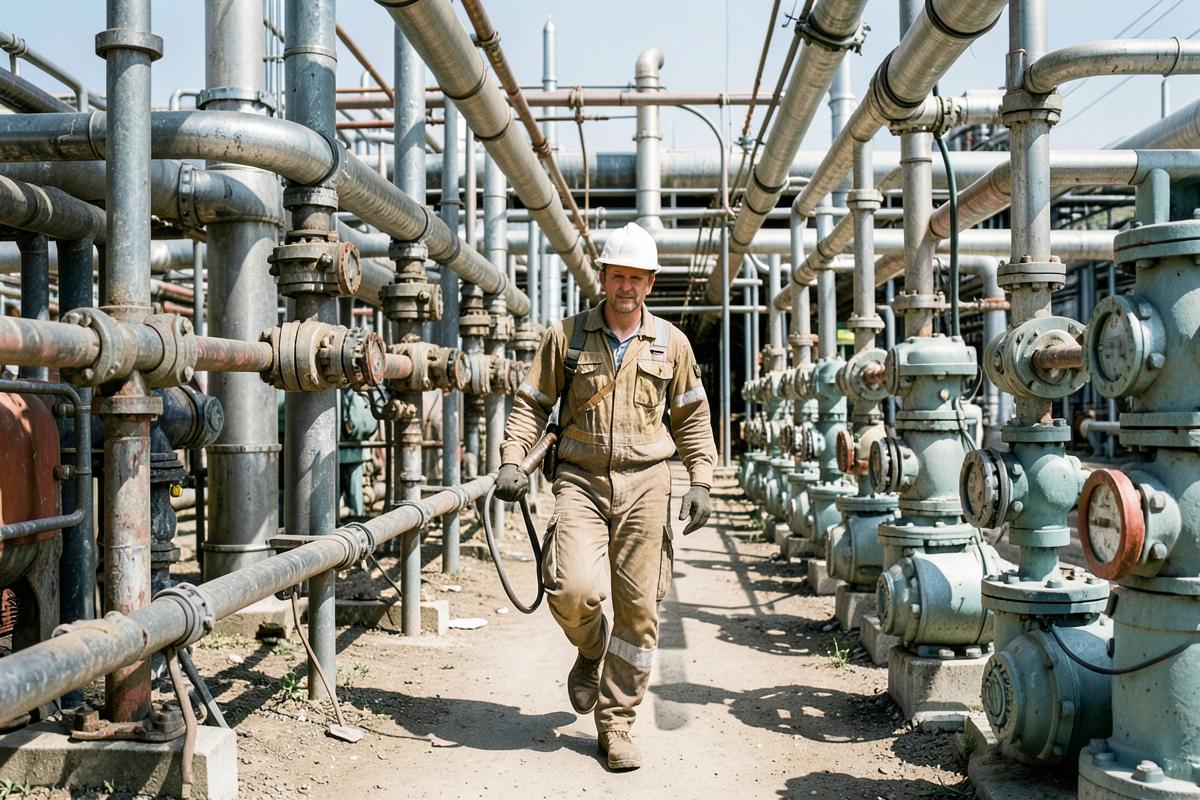
Occupation guide
Chemical Plant Workers and asbestos exposure
Reactors, pumps and steam systems relied on asbestos gaskets and lagging.
- Highest risk period
- Before 1982
- Typical latency
- 20–50 years after exposure
Chemical plant workers operate and maintain the reactors, pumps, heat exchangers and piping that produce industrial chemicals and plastics. Many of these processes run hot or under pressure, and for decades asbestos was used to insulate equipment and seal connections. Maintenance crews, operators and contractors could all encounter it during daily work and shutdowns. Contract crews brought in for shutdowns often worked at several plants in the same industrial corridor over their careers.
How asbestos became part of the job
Chemical processing relied on asbestos in several ways. Steam lines and hot process equipment were insulated with it, gaskets and packing sealed the connections carrying corrosive or hot materials, and some plants used asbestos in filters, cloth and lab materials. Because chemical service can damage seals quickly, gaskets and packing were replaced often, giving maintenance workers repeated exposure. During planned shutdowns, large crews opened equipment, stripped insulation and replaced components in a short time. Operators worked around insulated equipment for years and were present during much of the maintenance. Chemical plants tend to cluster along rivers and coastlines, and many workers moved between neighboring plants over their careers. Documenting each facility and the kind of equipment involved is central to a chemical plant worker's claim.
Materials
Asbestos products this trade handled
The product types that come up most often when this work history is reviewed.
Reactor and vessel insulation
Insulation on heated process equipment, removed for inspections, repairs and modifications.
Chemical-service gaskets
Gaskets sealing lines carrying hot or corrosive materials, replaced frequently because of chemical wear.
Pump and agitator packing
Packing around rotating shafts that leaked and needed regular replacement by maintenance crews.
Steam line covering
Insulation on the steam systems that heated processes throughout the plant.
Filter cloth and heat-resistant textiles
Asbestos fabrics used in some processes and for heat protection, shedding fibers with handling.
On the job
Tasks that put fibers in the air
Exposure usually came from ordinary, repeated work rather than one event.
Replacing corroded gaskets
Frequent gasket changes meant repeated scraping of flange faces, releasing fibers each time.
Repacking pumps and agitators
Removing worn packing from shafts put fibers into the air around the equipment.
Stripping insulation for inspections
Removing covering to inspect vessels for corrosion disturbed large areas of insulation at once.
Operating during shutdowns
Operators stayed on units while contractors worked on insulated equipment around them.
Evidence
Records that prove this kind of exposure
Decades later, these are the sources that usually rebuild the history.
| Record | Why it helps |
|---|---|
| Plant employment records | Confirm the facilities, departments and years where you worked. |
| Maintenance work descriptions | Explain how often you replaced gaskets, packing or insulation on chemical equipment. |
| Contractor and union records | Show contract work at multiple plants, common in chemical manufacturing regions. |
| Statements from operators and crews | Coworkers can confirm the equipment, materials and shutdown conditions you worked in. |
Where this work was common
Local guides for this trade
Cities whose shipyards, plants and job sites employed this trade in large numbers.
Questions
FAQs for chemical plant workers
Further reading
Explainers for this work history
Related trades
Other occupations with similar exposure
Find out in minutes whether a claim is still available
Free, confidential case review for patients and families in all 50 states.