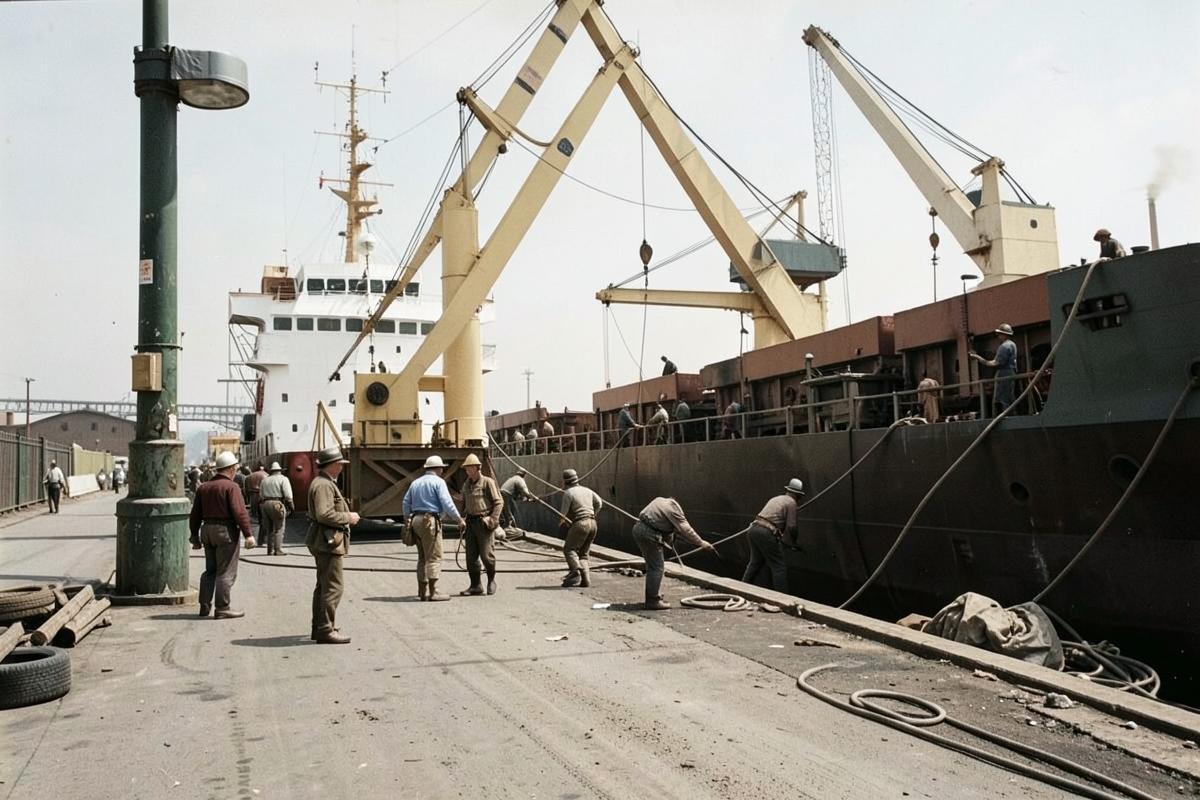
At work
Refinery and Chemical Plant Workers
Process units were wrapped in asbestos insulation and sealed with asbestos gaskets
- Topic
- Occupational risk
- Reading time
- 3 min
Refineries and chemical plants depend on heat, pressure and tightly sealed piping. For decades, much of that equipment was insulated and gasketed with asbestos-containing materials. Operators, maintenance crews and contractors all worked among it every day. Turnarounds, when units shut down for major repairs, often meant large-scale insulation removal and some of the heaviest dust of a whole career.
Turnarounds and heavy tear-out
A turnaround brought hundreds of workers to a unit for a short, intense period. Insulation was stripped from vessels, columns, piping and heat exchangers so repairs could be made. Gaskets were replaced by the thousands. Work often continued day and night until the unit came back online. Dust from all of this activity drifted across the unit and settled on everything, including workers who weren't handling insulation themselves. If you worked turnarounds, describe how often they happened, which units were involved and what you did. These periods can be central to an exposure history.
Many contract employers on one site
Refineries and chemical plants relied heavily on contractors, and many workers were employed by several different contractors at the same site over the years. That can make it hard to remember who employed you at any given time. Your Social Security earnings record and union records can help sort this out by year. Plant badge records, gate passes or safety training certificates may also show dates. Each contractor and each period may connect to different products and responsible companies, so it's worth building a careful list even if it takes some time to complete.
Why records vary from plant to plant
Some facilities kept detailed maintenance records and equipment histories for decades. Others changed ownership several times, and records may have moved, been archived or been lost along the way. This variation means your own memory and your coworkers' recollections become especially important. Describe the plant's name, its location and the units where you worked. Mention any ownership changes you remember. For well-known facilities, including many along the Gulf Coast, existing information from earlier claims may also help fill gaps about which products were used and when. Photos, badges and old safety cards can help too.
What to do next
- 1
List each plant, the units you worked in, and the years you worked there.
- 2
Note every turnaround you worked, including your trade and your main tasks.
- 3
Order your Social Security earnings statement to identify contract employers by year.
- 4
Find coworkers who can confirm the conditions during turnarounds and routine work.
Questions
Common questions
Keep reading
Related resources
Find out in minutes whether a claim is still available
Free, confidential case review for patients and families in all 50 states.