Occupation guide
Teachers and School Staff and asbestos exposure
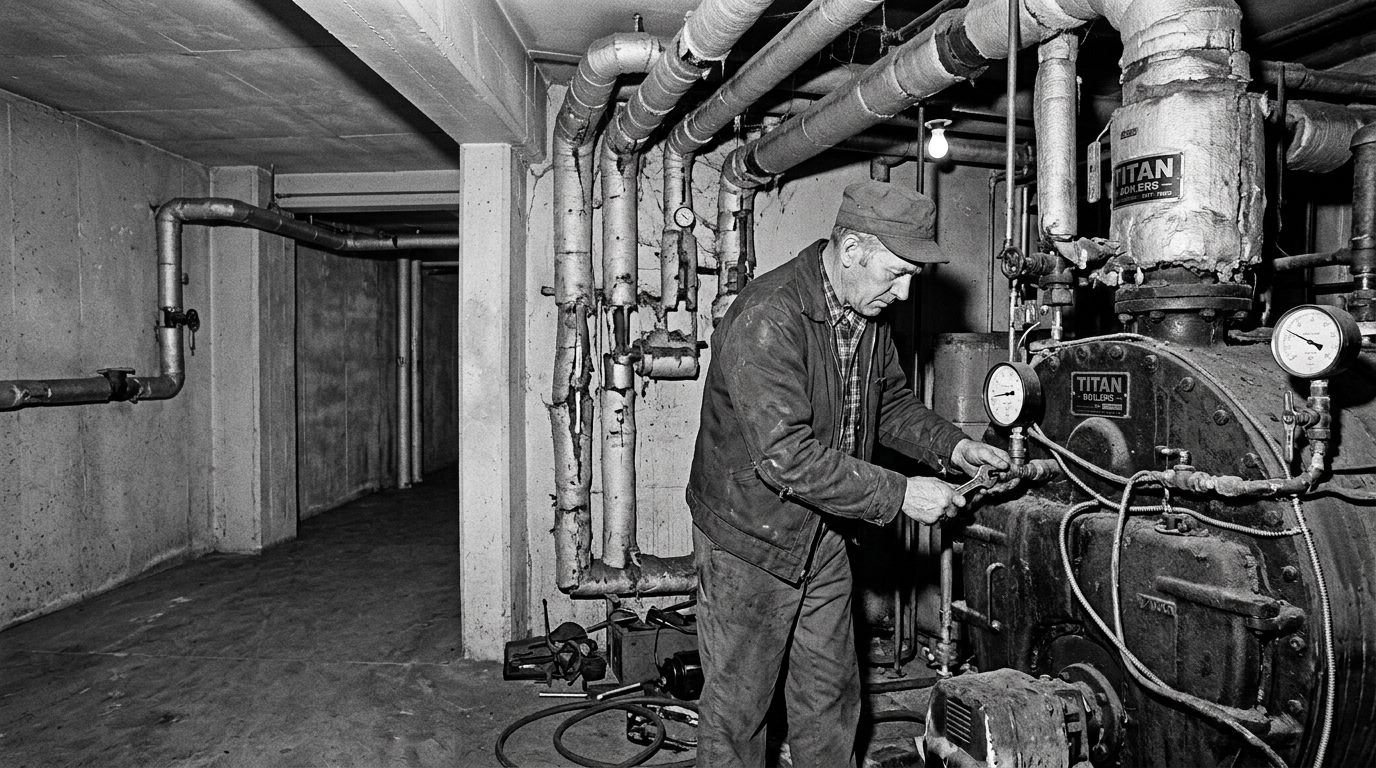
Deteriorating pipe insulation and ceiling tile exposed staff in older school buildings.
- Highest risk period
- Before 1982
- Typical latency
- 20–50 years after exposure
Teachers, custodians and other school staff spend years inside the same buildings. Many schools built before the 1980s used asbestos in pipe insulation, ceiling tiles, floor tile and boiler rooms. As those materials aged or were disturbed during repairs, fibers could be released into classrooms, hallways and maintenance areas where staff worked every day. Custodians, maintenance workers and staff in older buildings with damaged ceilings or pipe insulation usually faced the most exposure.
How asbestos became part of the job
Schools across the country were built during decades when asbestos was a common building material. Boiler rooms and heating systems were insulated with it, ceilings were finished with asbestos tiles or sprayed coatings, and floors were covered with asbestos vinyl tile. For teachers, exposure could come from damaged ceilings, deteriorating pipe insulation in classrooms, or dust from repairs happening during the school year. Custodians and maintenance staff often had the most direct contact, stripping and buffing floors, replacing tiles and working in boiler rooms. Federal rules later required schools to inspect for asbestos and manage it, but many materials remained in place for years. Some science and art classrooms also used items such as heat-resistant pads or kiln materials that could contain asbestos in older periods.
Materials
Asbestos products this trade handled
The product types that come up most often when this work history is reviewed.
Boiler and pipe insulation
Insulation on heating systems in boiler rooms and sometimes on pipes running through classrooms and hallways.
Ceiling tiles and sprayed coatings
Acoustic ceilings in classrooms and gyms that could shed material when damaged or disturbed.
Vinyl floor tile
Tile throughout hallways and classrooms, stripped, buffed and replaced by custodial staff.
Science and art classroom items
Older lab heat pads, gloves and kiln materials that some schools used before substitutes were adopted.
On the job
Tasks that put fibers in the air
Exposure usually came from ordinary, repeated work rather than one event.
Stripping and buffing floors
Custodians using machines on worn asbestos tile could release fibers across hallways and rooms.
Working in boiler rooms
Maintenance staff serviced heating equipment surrounded by aging insulation.
Teaching under damaged ceilings
Deteriorating or water-damaged ceiling materials could release fibers into classrooms during the school day.
Classroom repairs and renovations
Work done while buildings were occupied could spread dust into nearby teaching areas.
Evidence
Records that prove this kind of exposure
Decades later, these are the sources that usually rebuild the history.
| Record | Why it helps |
|---|---|
| School district employment records | Confirm which schools you worked in and during which years. |
| School asbestos management plans | Many districts document where asbestos materials were found in each building. |
| Building construction dates | Help show whether schools were built during the period when asbestos materials were common. |
| Colleague statements | Other staff can describe building conditions, repairs and damaged materials. |
Questions
FAQs for teachers and school staff
Further reading
Explainers for this work history
Related trades
Other occupations with similar exposure
Find out in minutes whether a claim is still available
Free, confidential case review for patients and families in all 50 states.