Occupation guide
Power Plant Workers and asbestos exposure
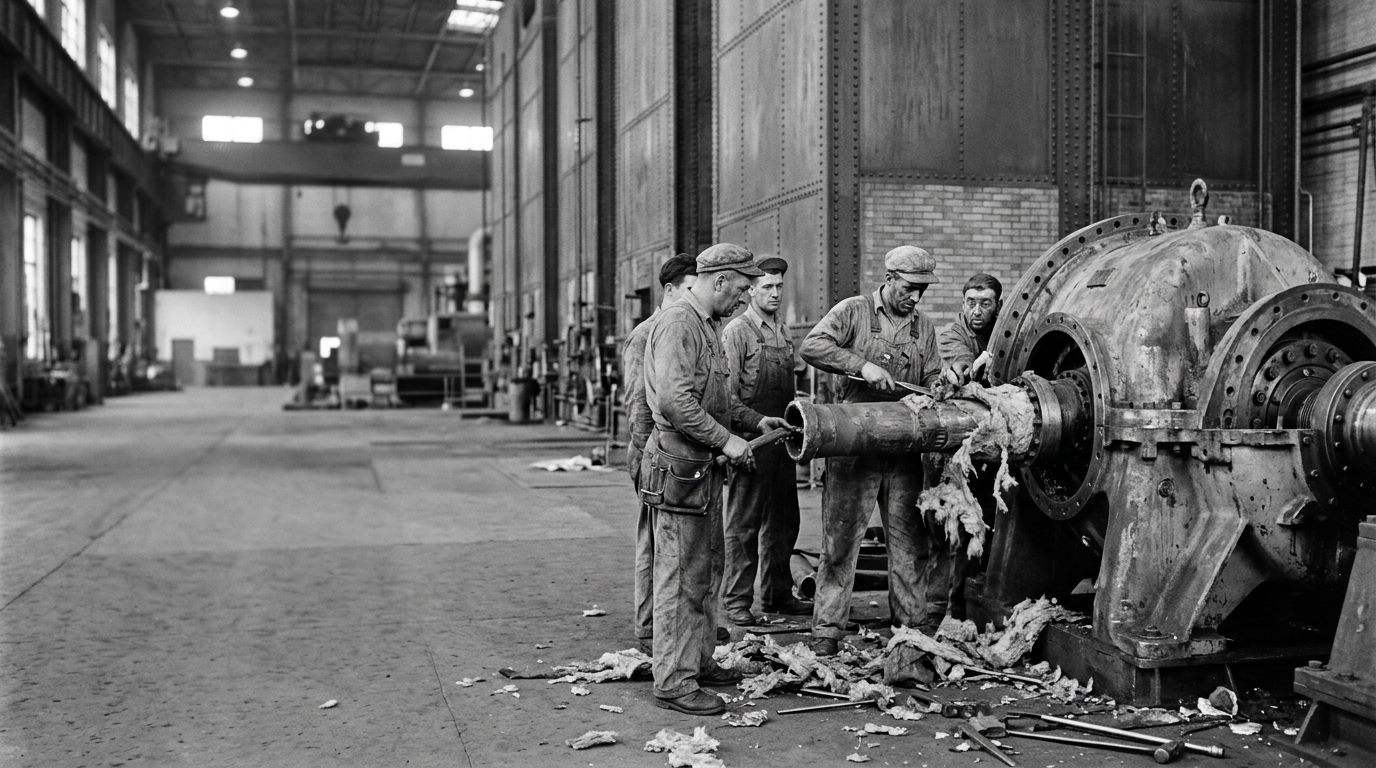
Turbines and boilers were insulated with asbestos, and outages meant large-scale removal.
- Highest risk period
- Before 1982
- Typical latency
- 20–50 years after exposure
Power plant workers keep electricity flowing by running and maintaining boilers, turbines, generators and the steam systems that connect them. Coal, oil, gas and nuclear stations all depend on high-temperature equipment, and for decades that equipment was insulated with asbestos. Operators, mechanics, electricians and outage contractors all spent time around it. Outage work brought in large crews for short, intense periods, and many workers traveled between several stations run by the same utility.
How asbestos became part of the job
A traditional power station is essentially a giant steam system, and asbestos was long used to insulate its boilers, turbines and piping. Turbine casings were covered with insulating cement and blankets, boilers were lined and wrapped, and gaskets and packing sealed steam connections throughout the plant. The most intense exposure usually came during outages, when a unit was shut down so crews could open turbines, replace insulation and repair boilers on a tight schedule. Turbine insulation in particular had to be removed before a turbine could be opened, releasing large amounts of dust in the turbine hall. Plant operators and maintenance staff also worked for years around aging insulation that crumbled with heat cycling. Many utilities operated several plants, and workers often moved between them.
Materials
Asbestos products this trade handled
The product types that come up most often when this work history is reviewed.
Turbine insulation cement and blankets
Thick insulation over turbine casings that had to be broken off whenever a turbine was opened for inspection.
Boiler insulation and refractory
Lining and covering on utility boilers, repaired and replaced during scheduled outages.
Main steam line covering
Large-diameter pipe insulation on high-pressure steam lines running through the plant.
Generator and electrical insulation
Heat-resistant materials in generators and electrical equipment serviced by plant electricians.
Gaskets and valve packing
Seals on steam valves and connections replaced repeatedly across the plant's piping systems.
On the job
Tasks that put fibers in the air
Exposure usually came from ordinary, repeated work rather than one event.
Opening turbines during outages
Breaking away turbine insulation filled the turbine hall with dust that settled on everyone working nearby.
Repairing boiler walls and tubes
Removing insulation and refractory to reach damaged tubes exposed maintenance crews inside and around the boiler.
Walking plant rounds
Operators checked equipment daily near insulation that deteriorated from years of heating and cooling.
Cleaning up after outage work
Laborers swept and removed insulation debris, stirring fibers back into the air.
Evidence
Records that prove this kind of exposure
Decades later, these are the sources that usually rebuild the history.
| Record | Why it helps |
|---|---|
| Utility employment records | Confirm the plants, departments and years you worked for the utility. |
| Outage and overhaul schedules | Identify periods when turbines and boilers were opened and insulation was removed. |
| Contractor dispatch records | Show outage work performed at plants through contracting companies. |
| Turbine and boiler manufacturer details | Help identify the insulation products specified for the equipment you worked on. |
Where this work was common
Local guides for this trade
Cities whose shipyards, plants and job sites employed this trade in large numbers.
Questions
FAQs for power plant workers
Further reading
Explainers for this work history
Related trades
Other occupations with similar exposure
Find out in minutes whether a claim is still available
Free, confidential case review for patients and families in all 50 states.