Occupation guide
HVAC Workers and asbestos exposure
Duct insulation and boiler work exposed HVAC crews across every decade.
- Highest risk period
- Before 1982
- Typical latency
- 20–50 years after exposure
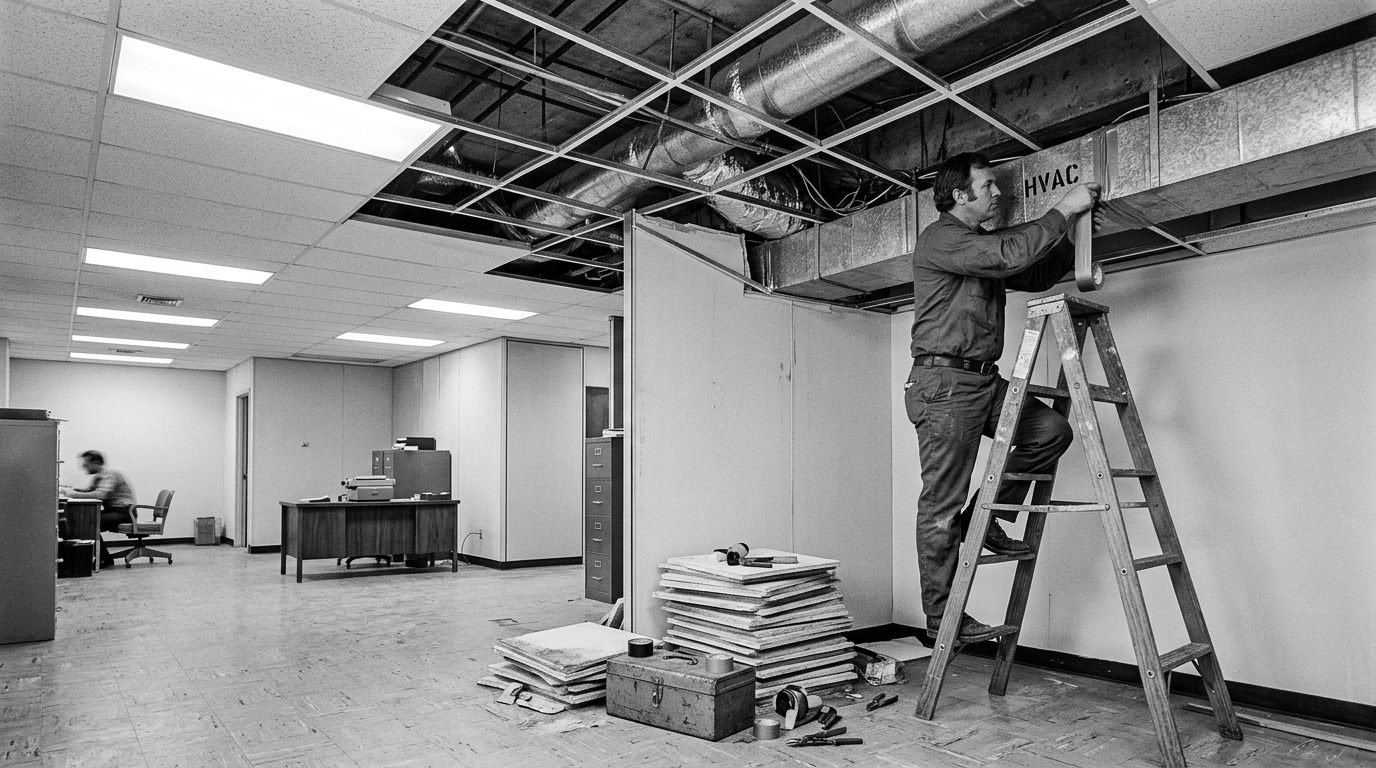
HVAC workers install and service heating, ventilation and air conditioning systems in homes and buildings. Older systems used asbestos in duct insulation, furnace and boiler components, duct tape and connectors. Technicians who removed old equipment or worked in mechanical rooms and attics often disturbed these materials. Replacement jobs in older homes and buildings, where old systems had to be torn out first, were often the dustiest part of the work.
How asbestos became part of the job
Heating and air systems were a common place for asbestos in homes and commercial buildings. Furnaces and boilers had asbestos insulation, gaskets and door seals, while ductwork could be wrapped with asbestos paper or sealed with asbestos tape. Flexible duct connectors, sometimes called vibration dampeners, were often made with asbestos cloth. HVAC workers installing new systems frequently had to tear out old ones, cutting and pulling apart these materials in basements, attics and crawl spaces with little airflow. In commercial buildings, they worked in mechanical rooms beside insulated piping and near sprayed fireproofing. Service calls could also involve replacing gaskets and seals on heating equipment. Because the trade spans residential and commercial work, a technician's exposure can come from many small jobs over many years.
Materials
Asbestos products this trade handled
The product types that come up most often when this work history is reviewed.
Duct wrap and paper
Asbestos paper and insulation wrapped around ductwork, torn off during system replacement.
Duct tape and joint sealants
Older tapes and compounds used to seal duct seams that could contain asbestos.
Flexible duct connectors
Cloth connectors joining ducts to equipment, often made with asbestos fabric that frayed with age.
Furnace and boiler insulation
Insulation, gaskets and door seals inside heating equipment serviced by technicians.
Boiler room pipe covering
Insulation on heating pipes in basements and mechanical rooms where HVAC crews worked.
On the job
Tasks that put fibers in the air
Exposure usually came from ordinary, repeated work rather than one event.
Removing old furnaces and boilers
Taking apart heating units broke insulation and gaskets in tight spaces.
Tearing out old ductwork
Pulling wrapped and taped ducts released fibers in attics, basements and ceilings.
Replacing duct connectors
Cutting out frayed asbestos cloth connectors put fibers near the technician's face.
Servicing heating equipment
Replacing seals and gaskets on furnaces and boilers meant scraping old material.
Evidence
Records that prove this kind of exposure
Decades later, these are the sources that usually rebuild the history.
| Record | Why it helps |
|---|---|
| HVAC contractor employment records | Show the companies you worked for and whether they focused on replacement or new work. |
| Sheet metal or pipe trades union records | Confirm your trade and dispatch history on larger projects. |
| Descriptions of equipment removed | Types and brands of old furnaces and boilers help identify asbestos components. |
| Coworker statements | Fellow technicians can confirm the materials and conditions on typical jobs. |
Where this work was common
Local guides for this trade
Cities whose shipyards, plants and job sites employed this trade in large numbers.
Questions
FAQs for hvac workers
Further reading
Explainers for this work history
Related trades
Other occupations with similar exposure
Find out in minutes whether a claim is still available
Free, confidential case review for patients and families in all 50 states.