Occupation guide
Textile Mill Workers and asbestos exposure
Asbestos yarn and cloth production created some of the highest measured fiber levels.
- Highest risk period
- Before 1982
- Typical latency
- 20–50 years after exposure
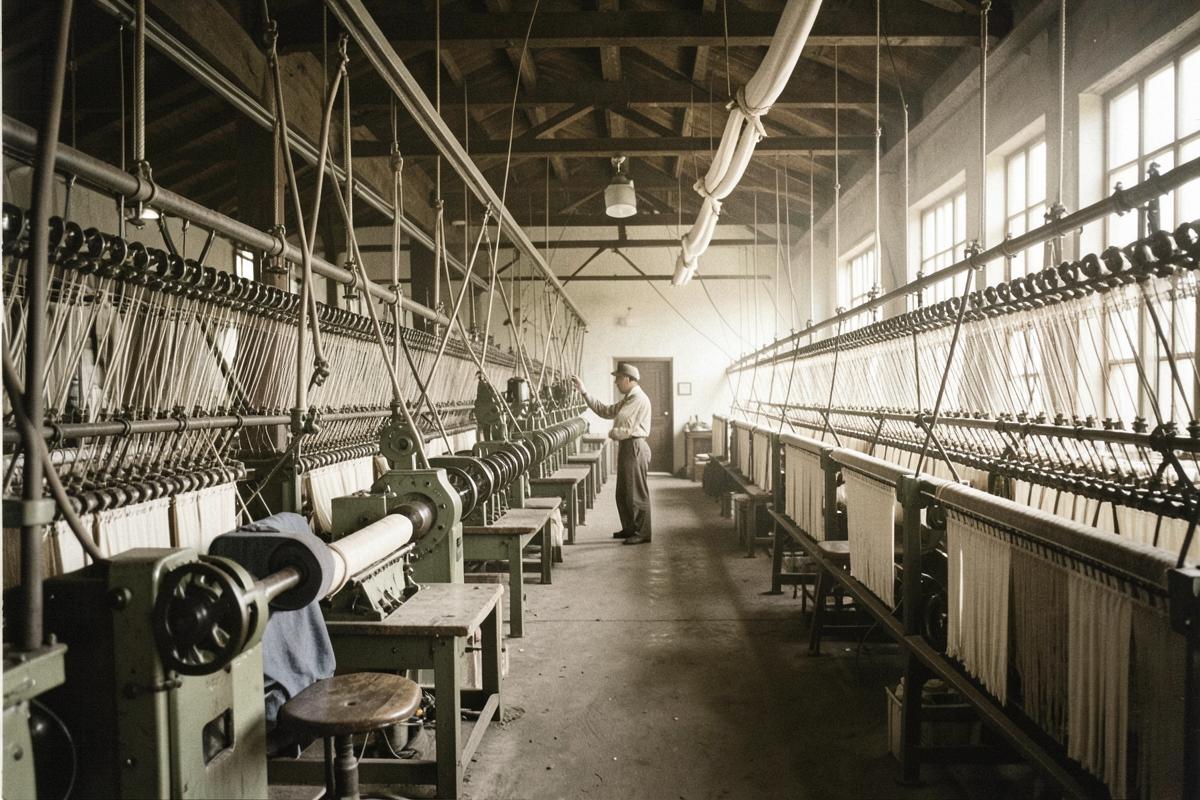
Textile mill workers operated the carding, spinning and weaving machines that turned fiber into yarn and cloth. Some mills processed asbestos itself, producing yarn, cloth, tape and rope for industrial use. Workers in those mills handled raw fiber throughout the day, and other textile mills used asbestos in machinery components and insulation. Workers who opened bales and cleaned machinery usually faced the densest dust, though fibers spread across entire mill floors.
How asbestos became part of the job
Asbestos textiles were used to make fire-resistant cloth, protective clothing, gaskets, brake linings, rope and tape. Mills that produced these goods processed raw asbestos fiber through the same basic steps as cotton: opening bales, carding, spinning and weaving. Each step created dust, and textile work was historically associated with very high fiber levels in the air. Workers who opened bales and cleaned machines often faced the heaviest dust. In conventional textile mills that did not make asbestos products, workers could still encounter asbestos in insulated steam lines, boilers and machine parts such as brake linings. Mill buildings were often large and enclosed, and dust spread across departments. Families of mill workers could also be exposed through dust carried home on clothes.
Materials
Asbestos products this trade handled
The product types that come up most often when this work history is reviewed.
Raw asbestos fiber
Bales of fiber opened and fed into machines at mills that manufactured asbestos textiles.
Asbestos yarn and thread
Spun material produced in the mill, shedding fibers as it ran through spinning and twisting frames.
Asbestos cloth and tape
Woven fabrics made for protective clothing and insulation, cut and handled in finishing departments.
Mill steam system insulation
Insulation on boilers and steam lines that heated and humidified mill buildings.
Machine brake and friction parts
Components on looms and machinery that wore during constant operation.
On the job
Tasks that put fibers in the air
Exposure usually came from ordinary, repeated work rather than one event.
Opening and feeding bales
Breaking apart compressed fiber and loading machines released heavy dust into the room.
Carding and spinning fiber
Machines combed and twisted asbestos into yarn, throwing fibers into the air continuously.
Cleaning textile machines
Blowing or brushing lint and fiber from machinery spread dust across the department.
Cutting and finishing cloth
Trimming woven asbestos fabric released loose fibers during finishing work.
Evidence
Records that prove this kind of exposure
Decades later, these are the sources that usually rebuild the history.
| Record | Why it helps |
|---|---|
| Mill employment records | Confirm which mill you worked at and whether it produced asbestos textiles. |
| Department and job assignments | Exposure varied by department, from bale opening to finishing and shipping. |
| Product information from the mill | Shows what the mill manufactured, which is central to the claim. |
| Coworker and family statements | Describe mill dust conditions and how dust was carried home. |
Questions
FAQs for textile mill workers
Further reading
Explainers for this work history
Related trades
Other occupations with similar exposure
Find out in minutes whether a claim is still available
Free, confidential case review for patients and families in all 50 states.