Occupation guide
Carpenters and asbestos exposure
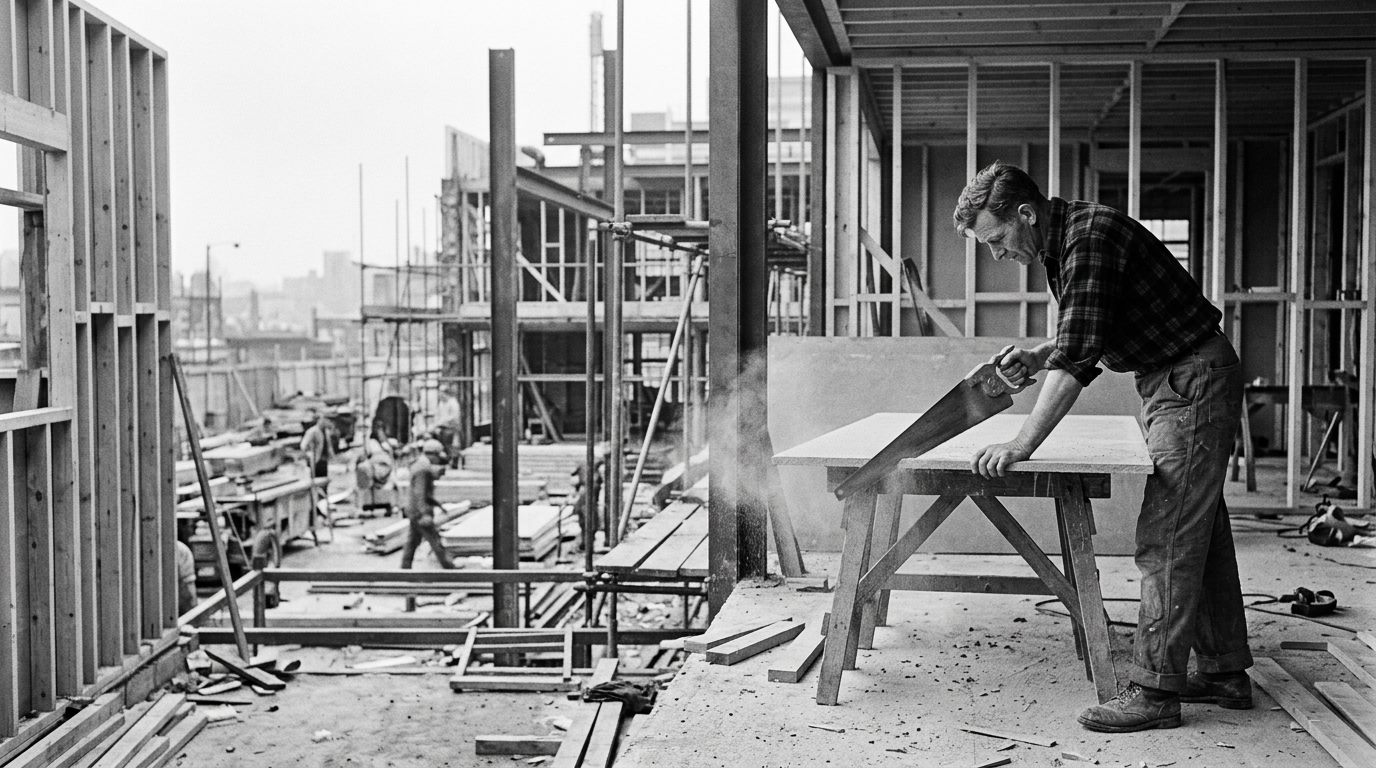
Cutting asbestos board and sanding joint compound created fine airborne dust.
- Highest risk period
- Before 1982
- Typical latency
- 20–50 years after exposure
Carpenters frame buildings, hang doors, build cabinets and install trim, and many also handle drywall and ceilings. In older construction, carpenters regularly cut and fitted materials that contained asbestos, such as fire-resistant boards, ceiling tiles and cement panels. They also worked beside finishers and insulators whose dust drifted through the same rooms. Shipyard joiners and commercial interior carpenters often worked in especially dusty conditions because several trades shared the same space.
How asbestos became part of the job
Carpentry brought workers into contact with asbestos mostly through the building products they cut and installed. Fire-rated boards and panels, including some used around furnaces and in commercial buildings, often contained asbestos. Acoustic ceiling tiles, asbestos-cement sheets and some flooring and underlayment products did too. Carpenters used saws, drills and sanders that turned these materials into dust, often indoors and without ventilation. In commercial and industrial settings, carpenters built forms and partitions in buildings where fireproofing had been sprayed on steel, and they worked close to drywall finishers sanding asbestos joint compound. Renovation carpenters removed old cabinets, trim and ceilings from buildings full of aging materials. Their exposure is often a mix of their own cutting work and bystander dust from other trades.
Materials
Asbestos products this trade handled
The product types that come up most often when this work history is reviewed.
Fire-resistant board
Rigid asbestos boards used around heating equipment and in fire-rated assemblies, sawed and drilled by carpenters.
Acoustic ceiling tiles
Ceiling panels cut to fit around lights and vents, releasing dust when trimmed or removed.
Asbestos-cement sheets
Panels used for soffits, partitions and exterior work that produced dust when cut with power saws.
Floor underlayment and tile
Flooring products that carpenters cut, laid and pulled up during installation and renovation.
On the job
Tasks that put fibers in the air
Exposure usually came from ordinary, repeated work rather than one event.
Sawing fire-rated panels
Cutting asbestos boards with circular saws threw fine dust into the air around the carpenter.
Installing and trimming ceiling tiles
Cutting tiles to size and working overhead let dust fall directly onto the worker.
Building near drywall finishers
Sanding of asbestos joint compound nearby filled rooms with dust during interior carpentry work.
Removing old cabinetry and trim
Renovation demolition disturbed walls, ceilings and flooring that contained asbestos.
Evidence
Records that prove this kind of exposure
Decades later, these are the sources that usually rebuild the history.
| Record | Why it helps |
|---|---|
| Carpenters union records | Confirm your trade, local and the contractors you worked for through dispatch. |
| Project and building lists | Identify buildings whose age and type suggest asbestos products were present. |
| Descriptions of materials cut | Details about the boards and tiles you handled help identify likely asbestos products. |
| Statements from other trades | Finishers and laborers can confirm the dusty work happening around your crew. |
Questions
FAQs for carpenters
Further reading
Explainers for this work history
Related trades
Other occupations with similar exposure
Find out in minutes whether a claim is still available
Free, confidential case review for patients and families in all 50 states.