Occupation guide
Drywall Finishers and asbestos exposure
Pre-1980 joint compounds contained asbestos and were sanded by hand.
- Highest risk period
- Before 1982
- Typical latency
- 20–50 years after exposure
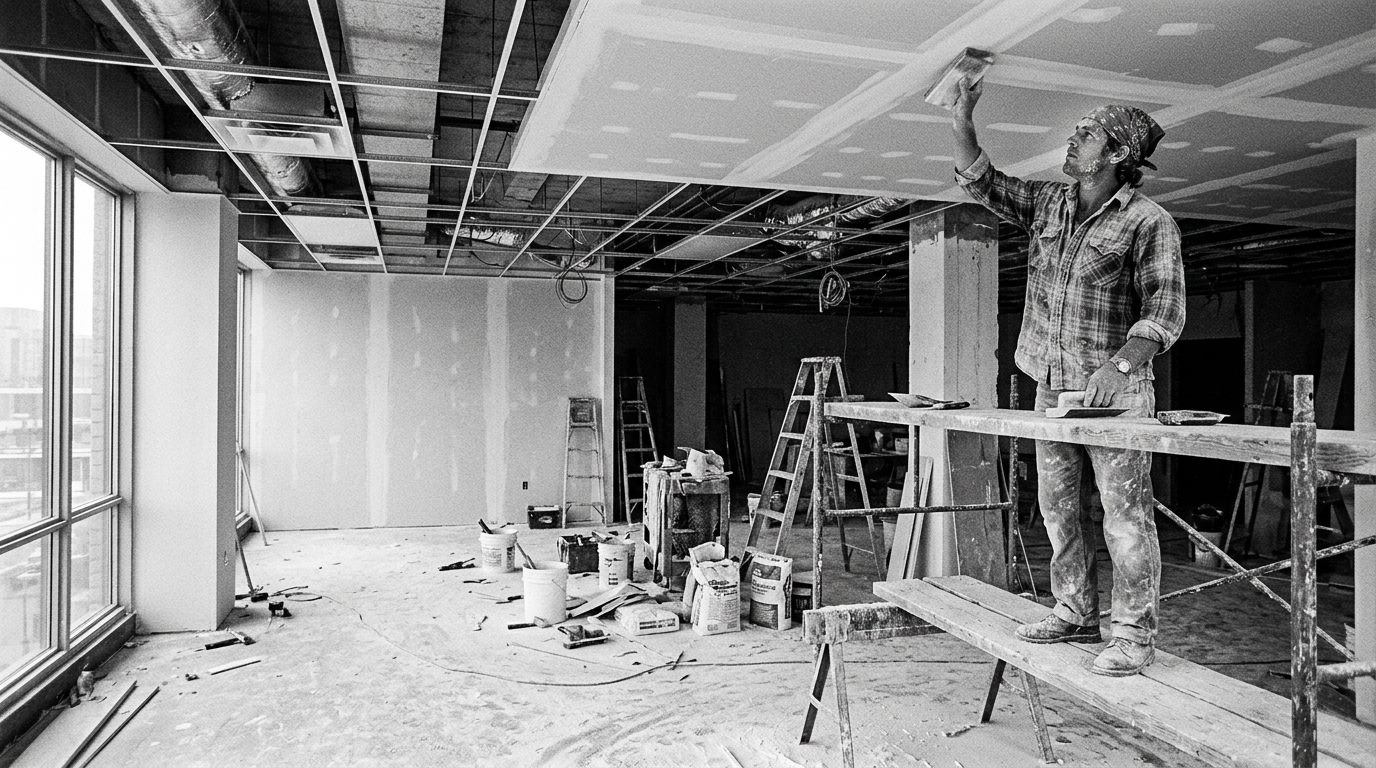
Drywall finishers, often called tapers, apply joint compound over drywall seams and sand it smooth before painting. For decades, many joint compounds and wall textures contained asbestos. Finishers mixed the compound, spread it by hand and sanded it repeatedly, so they breathed the dust at nearly every stage of their work. Their exposure often repeated on every job, sometimes several times a week, because each wall needed multiple coats and multiple rounds of sanding.
How asbestos became part of the job
Joint compound was one of the most common household and commercial products to contain asbestos before the late 1970s. Some compound came as a dry powder that finishers mixed with water, creating dust before application even began. Once dry, each coat was sanded, and sanding was usually done by hand or with pole sanders that sent fine powder into the room. Finishers worked indoors, often in rooms with windows closed to control drying, which kept dust in the air. Spray-applied wall and ceiling textures, including popcorn ceilings, were another source. Other trades working in the same rooms were exposed as well. Because finishers worked in new homes, apartments and commercial buildings, they often completed hundreds of jobs, each adding to their total exposure.
Materials
Asbestos products this trade handled
The product types that come up most often when this work history is reviewed.
Powdered joint compound
Dry mix poured into buckets and blended with water, releasing dust with every bag opened.
Ready-mixed joint compound
Premixed compound applied to seams and sanded smooth once it dried.
Spray-on ceiling texture
Textured ceiling finishes sprayed in homes and buildings, which created airborne material during application.
Wall texture products
Textured wall coatings applied by finishers and sanded or scraped during touch-ups.
On the job
Tasks that put fibers in the air
Exposure usually came from ordinary, repeated work rather than one event.
Mixing dry compound
Dumping and stirring powdered compound produced a cloud of dust at face level.
Sanding dried seams
Hand and pole sanding turned hardened compound into fine powder that filled closed rooms.
Spraying ceiling texture
Applying textured ceilings overhead let material drift down onto the finisher and nearby workers.
Sweeping sanding dust
Cleanup at the end of each coat stirred settled dust back into the air.
Evidence
Records that prove this kind of exposure
Decades later, these are the sources that usually rebuild the history.
| Record | Why it helps |
|---|---|
| Painters and finishers union records | Confirm your trade and the contractors who sent you to jobs. |
| Joint compound brand recollections | Brands you mixed and applied can connect your claim to specific manufacturers. |
| Contractor employment history | Shows the builders and drywall companies you worked for over the years. |
| Coworker statements | Other finishers can confirm the products used and how sanding was done. |
Questions
FAQs for drywall finishers
Further reading
Explainers for this work history
Related trades
Other occupations with similar exposure
Find out in minutes whether a claim is still available
Free, confidential case review for patients and families in all 50 states.