Occupation guide
Paper Mill Workers and asbestos exposure
Dryer felts and insulated steam systems were significant sources.
- Highest risk period
- Before 1982
- Typical latency
- 20–50 years after exposure
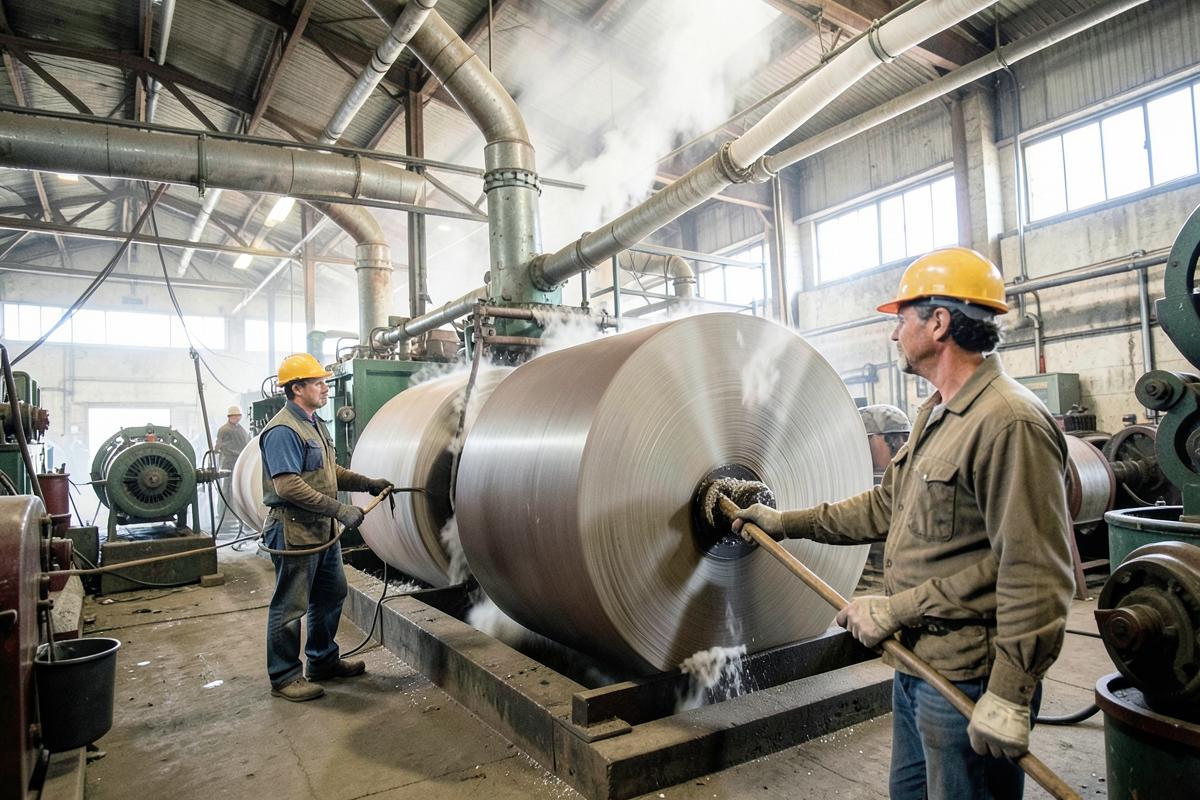
Paper mill workers run the machines and power systems that turn pulp into paper and packaging. Mills rely on large amounts of steam to dry paper, and for decades their boilers, dryers and steam lines were insulated with asbestos. Some machines also used felts and other components that contained it, exposing machine tenders, maintenance crews and powerhouse workers. Many worked at the same mill for decades, and dust from the powerhouse and machine rooms could travel throughout the plant.
How asbestos became part of the job
Paper making depends on heat. Wet sheets pass over long rows of steam-heated dryer cans, and the steam comes from large mill boilers, including recovery boilers used in pulp production. Asbestos insulation was widely used on these boilers, steam lines and dryer sections. Some dryer felts, which carry the paper through the dryers, were reported to contain asbestos in earlier decades, and they shed material as they wore and were replaced. Maintenance crews repacked pumps, replaced gaskets and repaired insulation around the machines, often while other departments kept working. Mill shutdowns brought in large maintenance crews and contractors for concentrated repair work. Paper mills were often the main employer in their towns, so many families had multiple members working there over long careers.
Materials
Asbestos products this trade handled
The product types that come up most often when this work history is reviewed.
Dryer section insulation
Insulation around steam-heated dryer cans and hoods, repaired and replaced near running machines.
Dryer felts
Heavy fabrics that carried paper through dryers, some reported to contain asbestos in earlier decades.
Recovery and power boiler insulation
Insulation and refractory on mill boilers serviced by powerhouse and maintenance crews.
Steam line gaskets and packing
Seals on the extensive steam systems feeding paper machines.
Pipe covering
Insulation on steam and hot-water lines running throughout the mill.
On the job
Tasks that put fibers in the air
Exposure usually came from ordinary, repeated work rather than one event.
Changing dryer felts
Removing worn felts and threading new ones brought workers into close contact with shedding fabric.
Repairing dryer hoods
Maintenance on insulated hoods and dryer sections disturbed insulation in hot, humid areas.
Servicing mill boilers
Powerhouse crews repaired boiler insulation and refractory during outages.
Repacking steam valves
Maintenance workers replaced packing and gaskets across the mill's steam system.
Evidence
Records that prove this kind of exposure
Decades later, these are the sources that usually rebuild the history.
| Record | Why it helps |
|---|---|
| Mill employment and department records | Show where you worked in the mill, since exposure varied by department. |
| Paperworkers union records | Confirm your job classifications and years at the mill. |
| Descriptions of felt and dryer work | Explain how often you handled felts or worked near dryer insulation. |
| Coworker statements | Fellow mill workers can confirm materials and conditions on specific machines. |
Where this work was common
Local guides for this trade
Cities whose shipyards, plants and job sites employed this trade in large numbers.
Questions
FAQs for paper mill workers
Further reading
Explainers for this work history
Related trades
Other occupations with similar exposure
Find out in minutes whether a claim is still available
Free, confidential case review for patients and families in all 50 states.