Occupation guide
Steel Mill Workers and asbestos exposure
Furnace linings, protective gear and pipe covering all contained asbestos.
- Highest risk period
- Before 1982
- Typical latency
- 20–50 years after exposure
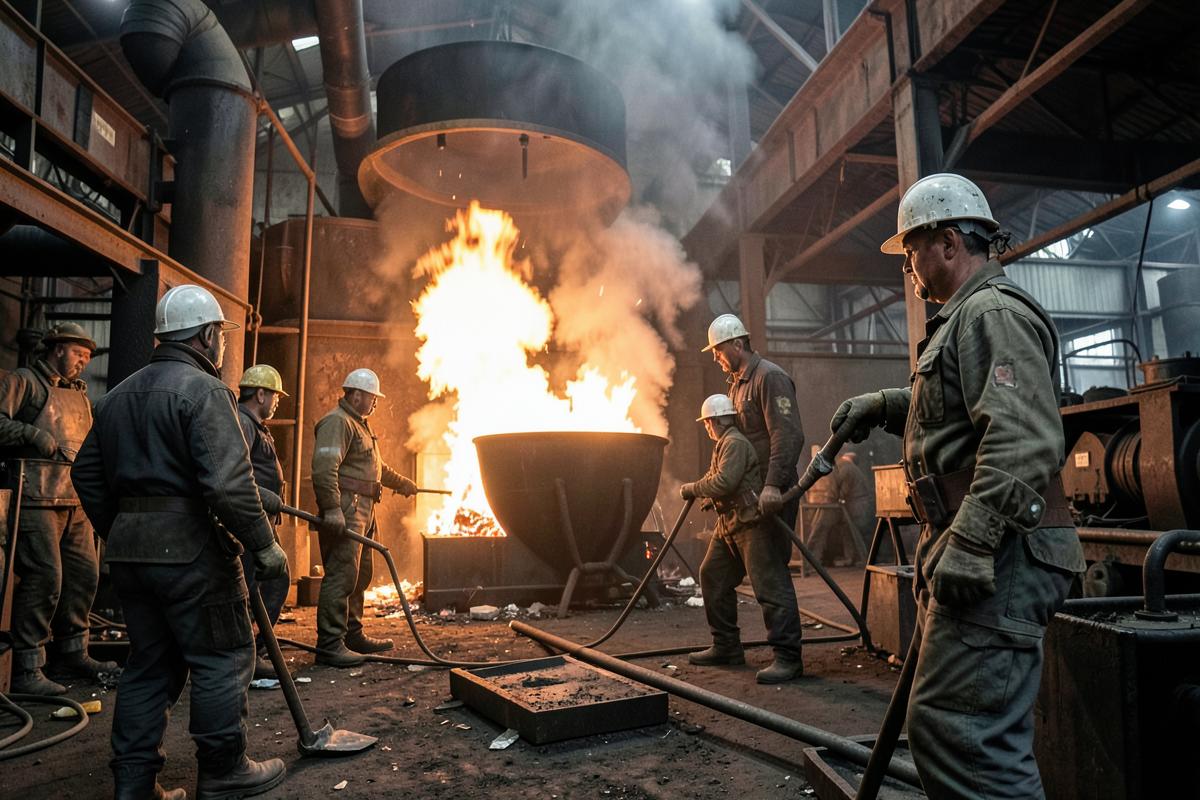
Steel mill workers operate furnaces, casters and rolling mills where metal is melted and shaped at extreme temperatures. To protect workers and equipment from that heat, mills used asbestos in furnace linings, protective clothing, insulation and equipment components for decades. Furnace crews, maintenance workers and laborers were all at risk of exposure. Bricklayers, millwrights and laborers in mill maintenance departments often faced the most direct contact during furnace rebuilds.
How asbestos became part of the job
Steelmaking involves molten metal, and asbestos was used heavily for heat protection. Furnaces, ladles and troughs were lined with refractory materials, some of which contained asbestos, and those linings were torn out and rebuilt regularly. Workers wore asbestos gloves, jackets, leggings and face protection near the furnaces. Pipes and equipment carrying steam and hot gases were insulated, and cranes and heavy machinery used asbestos brake linings. Maintenance departments, including bricklayers, millwrights and electricians, handled these materials during repairs. Mills operated around the clock, and dust from many sources built up in large buildings. Because steel communities often employed generations of the same families, secondary exposure through work clothing was also a concern in many mill towns.
Materials
Asbestos products this trade handled
The product types that come up most often when this work history is reviewed.
Furnace and ladle refractory
Heat-resistant linings that bricklayers and laborers tore out and replaced during regular furnace rebuilds.
Protective clothing
Gloves, coats, leggings and hoods made with asbestos cloth to shield workers from radiant heat and splashes.
Heat shields and mill boards
Asbestos panels and boards used to protect equipment and work areas from furnace heat.
Crane brake linings
Friction materials on overhead cranes that carried ladles and coils, serviced by mill maintenance crews.
Steam and gas line insulation
Covering on pipes carrying hot gases and steam throughout the mill.
On the job
Tasks that put fibers in the air
Exposure usually came from ordinary, repeated work rather than one event.
Relining furnaces and ladles
Tearing out spent refractory produced heavy dust inside confined, hot furnace spaces.
Working in protective gear
Wearing and shaking out worn asbestos gloves and coats released fibers throughout the shift.
Servicing overhead cranes
Replacing crane brakes and cleaning brake housings exposed maintenance workers to friction dust.
Repairing mill equipment
Removing insulation and heat shields to reach damaged equipment disturbed asbestos materials.
Evidence
Records that prove this kind of exposure
Decades later, these are the sources that usually rebuild the history.
| Record | Why it helps |
|---|---|
| Mill employment and seniority records | Show your departments and jobs, which differed widely in exposure within the same mill. |
| Steelworkers union records | Confirm membership, job classifications and the mill where you worked. |
| Descriptions of protective gear | Explain the gloves and clothing you wore, which were a notable asbestos source in mills. |
| Coworker statements | Fellow mill workers can describe furnace rebuilds and the materials handled. |
Where this work was common
Local guides for this trade
Cities whose shipyards, plants and job sites employed this trade in large numbers.
Questions
FAQs for steel mill workers
Further reading
Explainers for this work history
Related trades
Other occupations with similar exposure
Find out in minutes whether a claim is still available
Free, confidential case review for patients and families in all 50 states.