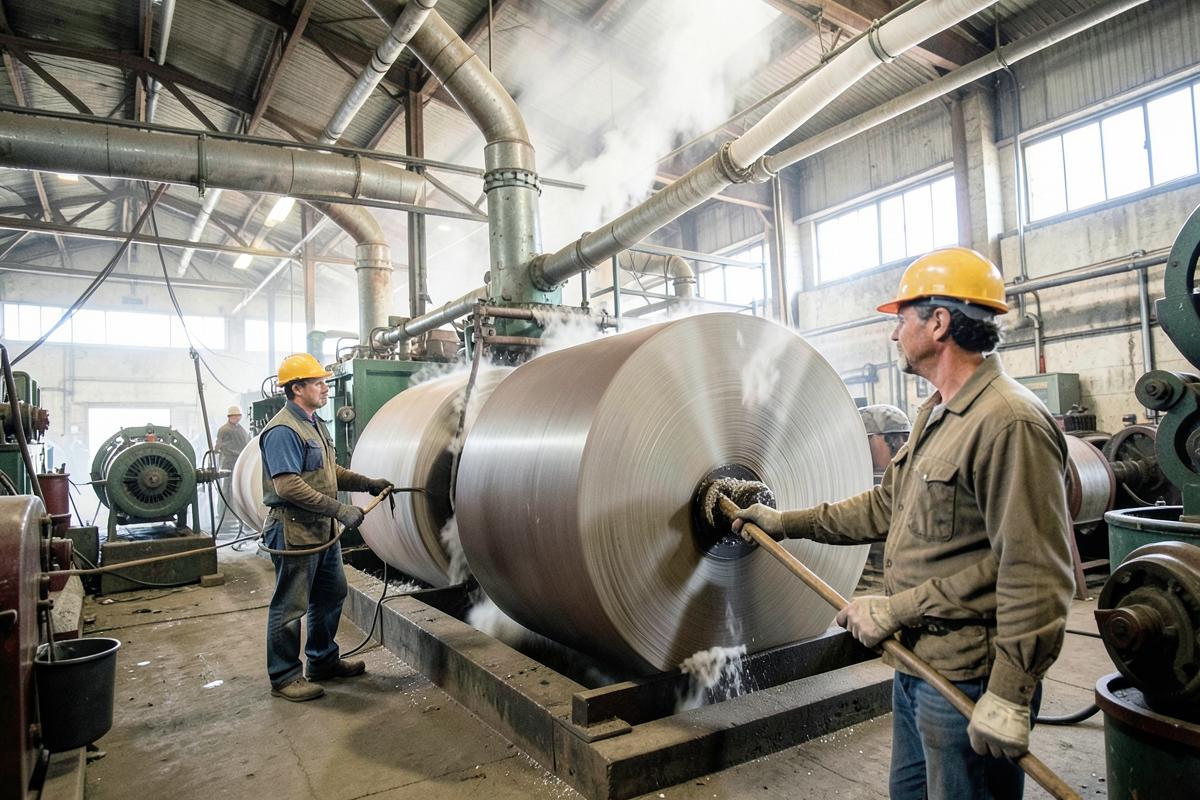
At work
Pipefitters and Steamfitters
Pipefitters cut, removed and rewrapped asbestos pipe insulation on every industrial job
- Topic
- Occupational risk
- Reading time
- 3 min
Pipefitters and steamfitters installed and repaired the piping systems that carried steam, water and chemicals through industrial plants and buildings. Getting to a pipe often meant cutting away its insulation first, and finishing a job meant sealing joints with gaskets and packing. For many fitters, those tasks repeated daily across whole careers, which is why the trade appears so often in asbestos claims.
Cutting into insulated lines
Before a fitter could repair a valve or replace a section of pipe, the insulation around it had to come off. That usually meant cutting it or knocking it loose by hand, often while standing on a ladder or working in a pipe rack. The dust landed on the fitter and anyone nearby. After the repair, insulators might rewrap the pipe right beside the fitter, adding more dust to the same space. Because steam lines ran through nearly every part of a plant, this cycle happened constantly. When you describe your work, explain how often you removed insulation yourself and how often you worked alongside insulators.
Gaskets, packing and flange work
Fitters also dealt with the materials that sealed pipe connections. Old gaskets often had to be scraped or wire-brushed off flanges, and valve packing was pulled out and replaced. In earlier decades many of these sealing materials contained asbestos. Scraping and brushing could release fibers even when the pipe itself wasn't insulated. Cutting new gaskets from sheet material added more dust. These tasks are easy to overlook because they seemed so routine at the time. If you remember doing gasket or packing work, include it in your history, because it can point to additional product manufacturers beyond the insulation companies.
How apprenticeship records help
Many fitters trained through formal apprenticeship programs run by their union and contractors. Apprenticeship files can show when you started, which contractors you worked for during training, and sometimes the projects you were assigned to. That early period is often the hardest to remember, yet it may involve heavy exposure because apprentices did much of the tear-out and cleanup work. Combined with later dispatch records and your Social Security earnings, apprenticeship files help create a complete, dated timeline. A timeline like that supports trust claims and any lawsuit, and it makes product identification much easier.
What to do next
- 1
Ask your union local for apprenticeship, dispatch and pension records covering your career.
- 2
Describe how often you removed insulation, scraped gaskets or replaced valve packing yourself.
- 3
List the plants, buildings and ships where you did most of your piping work.
- 4
Keep a copy of your diagnosis paperwork alongside your written work history notes.
Questions
Common questions
Keep reading
Related resources
Find out in minutes whether a claim is still available
Free, confidential case review for patients and families in all 50 states.