Occupation guide
Roofers and asbestos exposure
Roofing felt, mastic and cement sheets frequently contained asbestos.
- Highest risk period
- Before 1982
- Typical latency
- 20–50 years after exposure
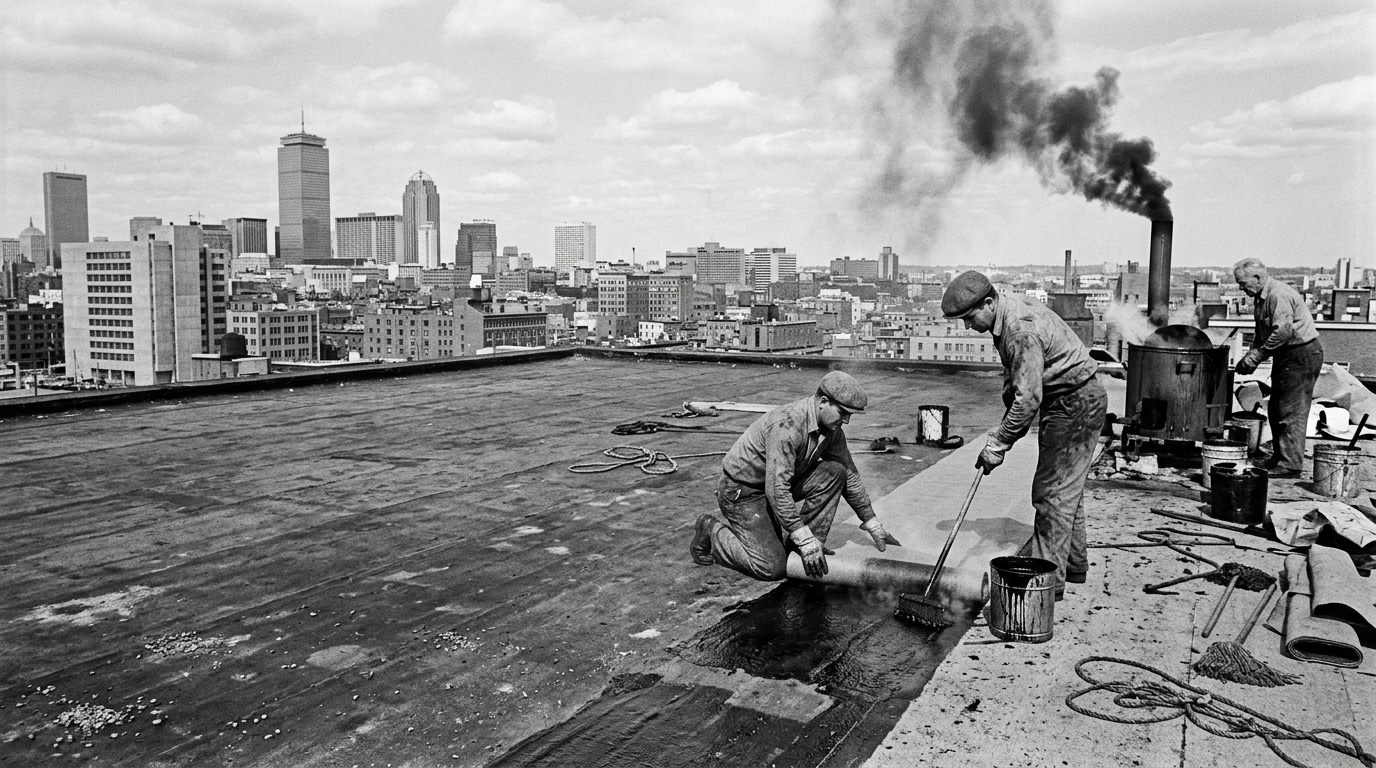
Roofers install and repair roofs on homes, schools, factories and commercial buildings. For much of the last century, many roofing materials contained asbestos, including shingles, felts, cements and coatings. Tearing off old roofs, cutting new materials and applying hot and cold coatings could release fibers, often outdoors but in dusty, repetitive work. Tear-off crews and roofers who worked on older commercial and industrial buildings often handled the largest amounts of these materials.
How asbestos became part of the job
Asbestos was used in roofing because it added strength and fire resistance. Asbestos-cement shingles were common on homes and some commercial buildings, while built-up roofs used felts and roofing cements that could contain asbestos. Flashing compounds and coatings sometimes did as well. New roofing required cutting and nailing these materials, but tear-off work was typically dustier, as crews ripped up old layers with shovels and bars and threw debris into containers. Although roofers usually worked outside, the volume of material and the close handling of it could still create meaningful exposure. Some roofers also worked on industrial buildings with insulated equipment on the roof. Because roofing crews often worked seasonally and moved between employers, documenting the full work history can take some effort.
Materials
Asbestos products this trade handled
The product types that come up most often when this work history is reviewed.
Asbestos-cement shingles
Rigid shingles cut and nailed on homes and buildings, and broken apart during removal.
Roofing felts
Layers in built-up roofs that were rolled out new and torn up during replacement.
Roofing cement and mastic
Sealants spread around flashing and seams, scraped off during repairs.
Roof coatings
Protective coatings applied over roofs, some older formulations of which contained asbestos.
On the job
Tasks that put fibers in the air
Exposure usually came from ordinary, repeated work rather than one event.
Tearing off old roofs
Ripping up aged shingles and felts broke materials apart and created dust across the roof.
Cutting cement shingles
Scoring and snapping or sawing shingles to fit released dust at the cut.
Sealing flashing and seams
Scraping old cement and applying new material brought roofers into close contact with mastics.
Loading roofing debris
Shoveling and dumping torn-off material stirred up dust around the crew.
Evidence
Records that prove this kind of exposure
Decades later, these are the sources that usually rebuild the history.
| Record | Why it helps |
|---|---|
| Roofing contractor employment records | Show which companies you worked for and the type of roofing each did. |
| Roofers union records | Confirm your trade and work history, especially with seasonal employers. |
| Descriptions of tear-off work | Explain how often you removed old roofs, which is often the dustiest part of the job. |
| Coworker statements | Crew members can confirm materials used and working conditions on specific jobs. |
Questions
FAQs for roofers
Further reading
Explainers for this work history
Related trades
Other occupations with similar exposure
Find out in minutes whether a claim is still available
Free, confidential case review for patients and families in all 50 states.