Occupation guide
Longshoremen and asbestos exposure
Handling raw asbestos cargo in sacks released fibers across the docks.
- Highest risk period
- Before 1982
- Typical latency
- 20–50 years after exposure
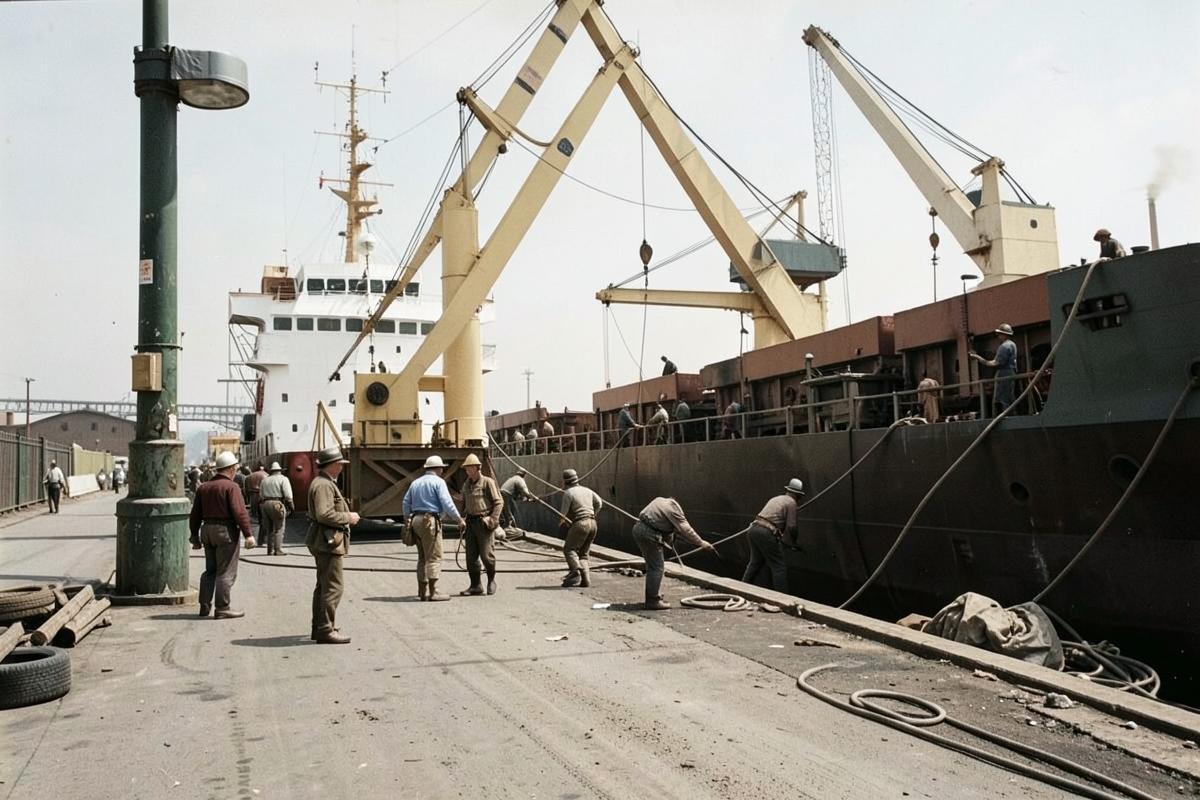
Longshoremen load and unload cargo on the nation's docks. For decades, raw asbestos was shipped into U.S. ports in burlap and paper sacks, and those sacks often leaked or tore during handling. Dockworkers also worked aboard ships with asbestos-insulated holds and machinery, making the waterfront a notable source of exposure. Because work was assigned day by day through hiring halls, a single longshoreman might handle asbestos cargo on many different ships.
How asbestos became part of the job
The United States imported large amounts of raw asbestos for use in manufacturing, much of it arriving by ship. Longshoremen moved the sacks by hand, on hooks and with slings, and damaged bags spilled fibers across holds and piers. Workers commonly swept up spilled material by hand. Dockworkers also handled other cargo in ship holds lined with insulated pipes and worked near ship machinery, and some cargo included finished asbestos products. Port work was often arranged through daily hiring halls, so a longshoreman might work many different ships, companies and piers in a single month. Because of that, records from the hiring hall and union are often the best way to document a career. Dust carried home on clothing could also affect family members.
Materials
Asbestos products this trade handled
The product types that come up most often when this work history is reviewed.
Raw asbestos in sacks
Imported fiber shipped in burlap or paper bags that frequently tore and spilled during loading and unloading.
Ship hold insulation
Insulated pipes and bulkheads in cargo holds and working spaces aboard vessels.
Finished asbestos products
Manufactured goods such as building materials that were handled as cargo at ports.
Winch and equipment brakes
Friction components on cargo winches and dock machinery that wore and produced dust.
On the job
Tasks that put fibers in the air
Exposure usually came from ordinary, repeated work rather than one event.
Handling damaged asbestos sacks
Lifting torn bags released fibers directly onto workers and into the hold.
Sweeping spilled fiber
Cleaning holds and piers by hand stirred up loose asbestos from broken sacks.
Working in ship holds
Loading in enclosed holds kept dust close and exposed workers to hold insulation.
Operating cargo equipment
Running and maintaining winches and cranes brought workers near worn brake materials.
Evidence
Records that prove this kind of exposure
Decades later, these are the sources that usually rebuild the history.
| Record | Why it helps |
|---|---|
| Hiring hall and union records | Often the best record of which ships and piers you worked on over the years. |
| Port and terminal assignments | Identify ports where raw asbestos cargo was commonly handled. |
| Recollections of asbestos cargo | Descriptions of sacks, markings and origins help establish what was handled. |
| Fellow dockworker statements | Coworkers can confirm the cargo handled and conditions in holds and on piers. |
Where this work was common
Local guides for this trade
Cities whose shipyards, plants and job sites employed this trade in large numbers.
Questions
FAQs for longshoremen
Further reading
Explainers for this work history
Related trades
Other occupations with similar exposure
Find out in minutes whether a claim is still available
Free, confidential case review for patients and families in all 50 states.