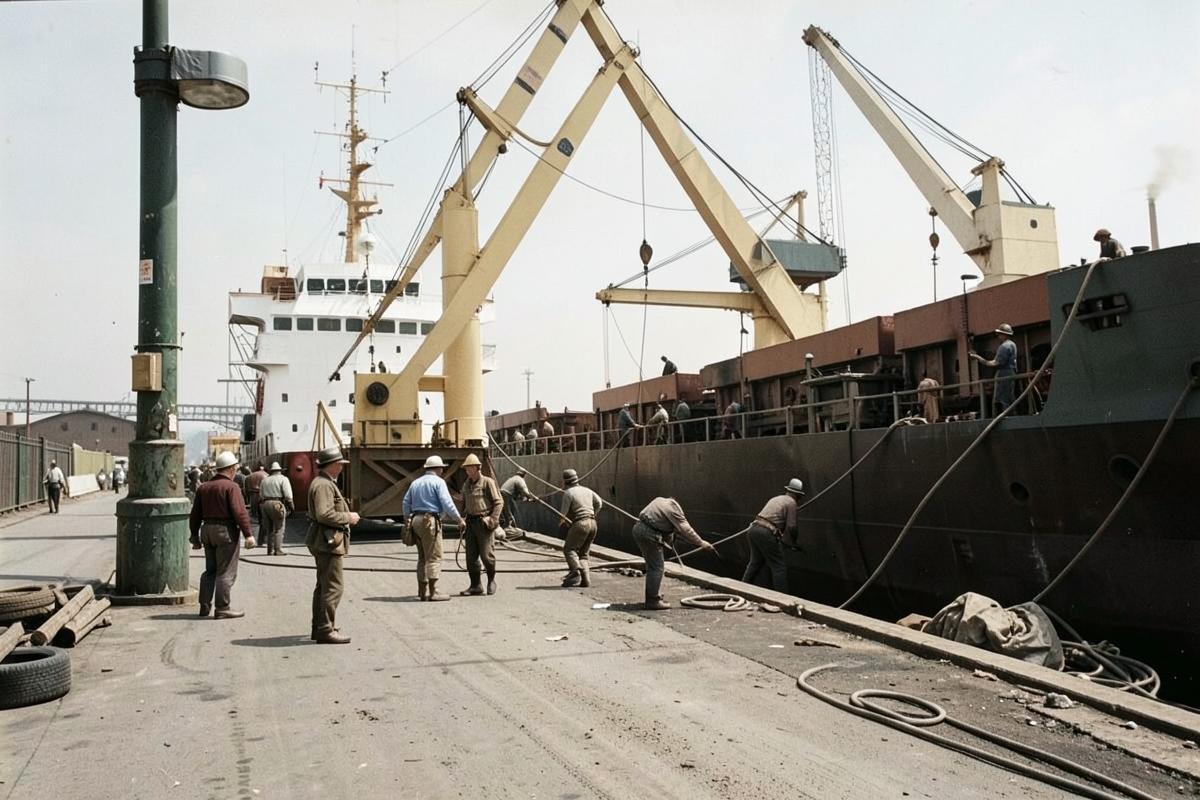
At work
Millwrights
Millwrights installed and repaired insulated industrial machinery across plants
- Topic
- Occupational risk
- Reading time
- 3 min
Millwrights installed, aligned and repaired heavy industrial machinery in mills, plants and factories. Much of that equipment used asbestos-containing gaskets and packing, and it often sat among insulated pipes and boilers. Many millwrights traveled between sites for major installations and shutdowns, building long, varied exposure histories that can span many facilities and several states.
Traveling between plants and mills
Millwright work often followed large projects, such as installing new production lines or rebuilding equipment during shutdowns. A millwright might work at a paper mill one month, a power plant the next and a steel mill after that. Each site had its own mix of insulated equipment and asbestos-containing parts. This variety means your history may involve many locations and products, and possibly several states. Try to list each major project with its city, the type of facility and the approximate year, even if you only worked there for a few weeks.
Replacing gaskets and packing
Setting and repairing machinery meant handling pumps, compressors, gearboxes, dryers and turbines, many of which used gaskets and packing that contained asbestos in earlier decades. Millwrights scraped old gaskets from flanges, pulled worn packing from glands and cut replacements to size by hand. These tasks were routine and repeated constantly across a career. Describe the equipment you worked on most often, and note whether you cut new gaskets from sheet material, since that detail can help identify the products involved and the companies that made them. If you remember the sheet or packing sold at the plant storeroom, write that down as well.
Maintenance dust during shutdowns
When plants shut down for maintenance, millwrights worked alongside insulators, pipefitters and boilermakers. Insulation was removed from equipment and piping so repairs could be made, and the dust spread across the work areas. Shutdowns often ran long hours with many crews packed into close quarters. Millwrights could be exposed simply by being present while other trades worked. Include your shutdown experience in your history, along with the trades working nearby, the kinds of equipment being rebuilt and how long those projects typically lasted. Photos from shutdowns, or a travel card showing the dates, can help pin down when each one happened.
What to do next
- 1
List major installation and shutdown projects, with facility type, city and approximate year.
- 2
Request dispatch, travel and pension records from your union local and any locals you traveled to.
- 3
Describe the machinery you serviced and the gaskets or packing you replaced on it.
- 4
Identify coworkers who worked the same shutdowns and can confirm the conditions there.
Questions
Common questions
Keep reading
Related resources
Find out in minutes whether a claim is still available
Free, confidential case review for patients and families in all 50 states.