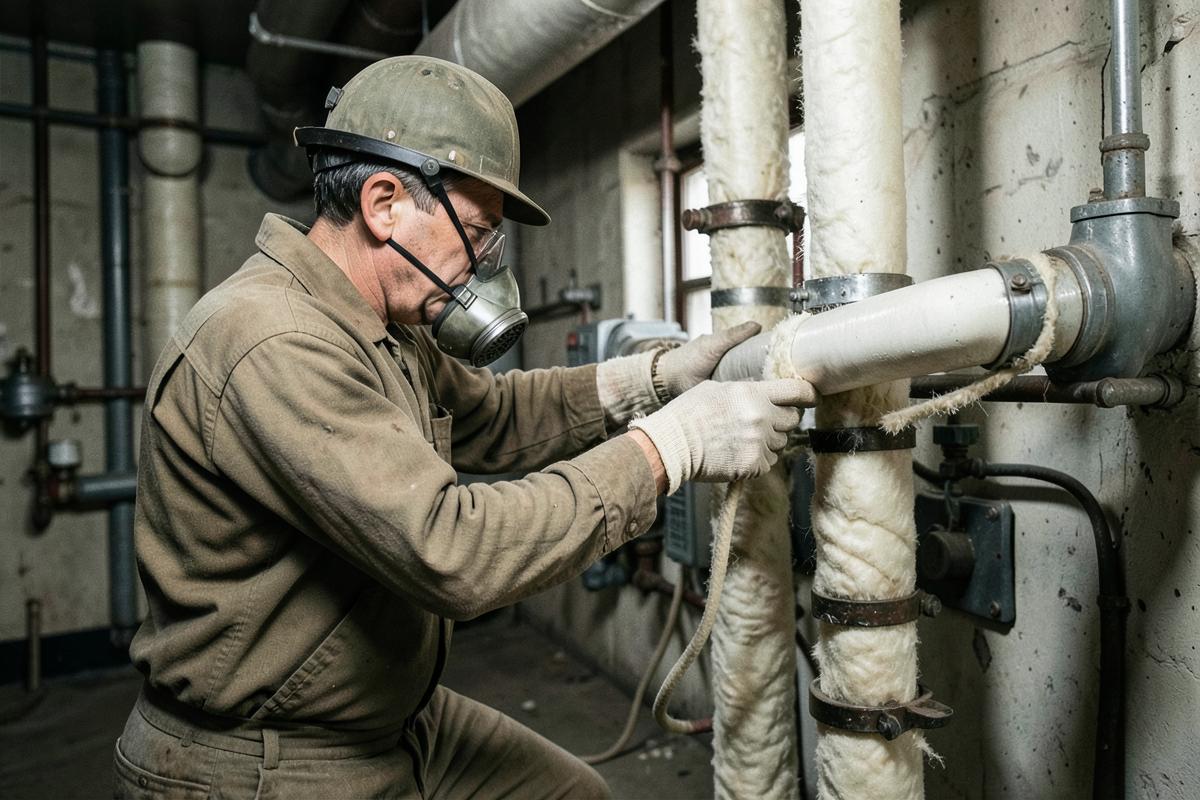
At work
Navy Veterans and Asbestos
Navy ships used asbestos in every engine and boiler room, making veterans one of the largest affected groups
- Topic
- Occupational risk
- Reading time
- 3 min
For much of the twentieth century, the Navy built and repaired ships with asbestos because it resisted heat and fire. That choice reached far beyond the engine room. Sailors slept, ate and stood watch in spaces where insulated pipes ran overhead, so many veterans who never touched insulation still breathed its dust. If you or a family member served aboard ship or in a shipyard, that service history matters.
Why shipboard exposure reached every rating
Steam powered most Navy ships, and steam needs miles of insulated piping. That piping ran through engine rooms and boiler rooms, but also through passageways, berthing compartments and mess decks. Ventilation moved air, and dust, from one space to the next. When crews repaired or replaced insulation at sea, the work often happened in the same compartments where others were living. This is why veterans who served as cooks, radiomen or deck crew sometimes have exposure histories that look similar to machinist's mates and boiler technicians. What you did aboard ship still matters, but so does which ships you served on and when.
How ship assignments are reconstructed
Most veterans remember their ships long after other details fade. That memory is a strong starting point. Your DD-214 lists your rate and discharge details, and your full personnel file usually shows each duty station and ship assignment. Ship histories, deck logs and shipyard overhaul records can then show where a vessel was and what work was done on it. Together these records can place you in specific spaces during specific periods. If your records are incomplete, shipmates' statements and family letters or photos from service can help fill the gaps. Starting the records request early saves time later.
Two separate paths for compensation
Veterans often worry that a legal claim could affect their VA benefits, or that suing means suing the government. Neither is usually the case. A VA disability claim is filed with the Department of Veterans Affairs and depends on your service connection. A legal claim is brought against the private companies that manufactured and sold asbestos products to the Navy. Many veterans pursue both at once. Trust fund claims against bankrupt manufacturers are a third route. Because each path has its own forms, evidence rules and timelines, it helps to understand all three before you choose where to start.
What to do next
- 1
Request your complete military personnel file, not just the DD-214, through the National Archives.
- 2
Write down every ship, shore station and shipyard you remember, with approximate years for each.
- 3
Contact a veterans service officer about filing a VA disability claim for mesothelioma.
- 4
Ask for a free case review to learn which product manufacturers may be responsible for your exposure.
Questions
Common questions
Keep reading
Related resources
Find out in minutes whether a claim is still available
Free, confidential case review for patients and families in all 50 states.