At work
Shipyard Workers
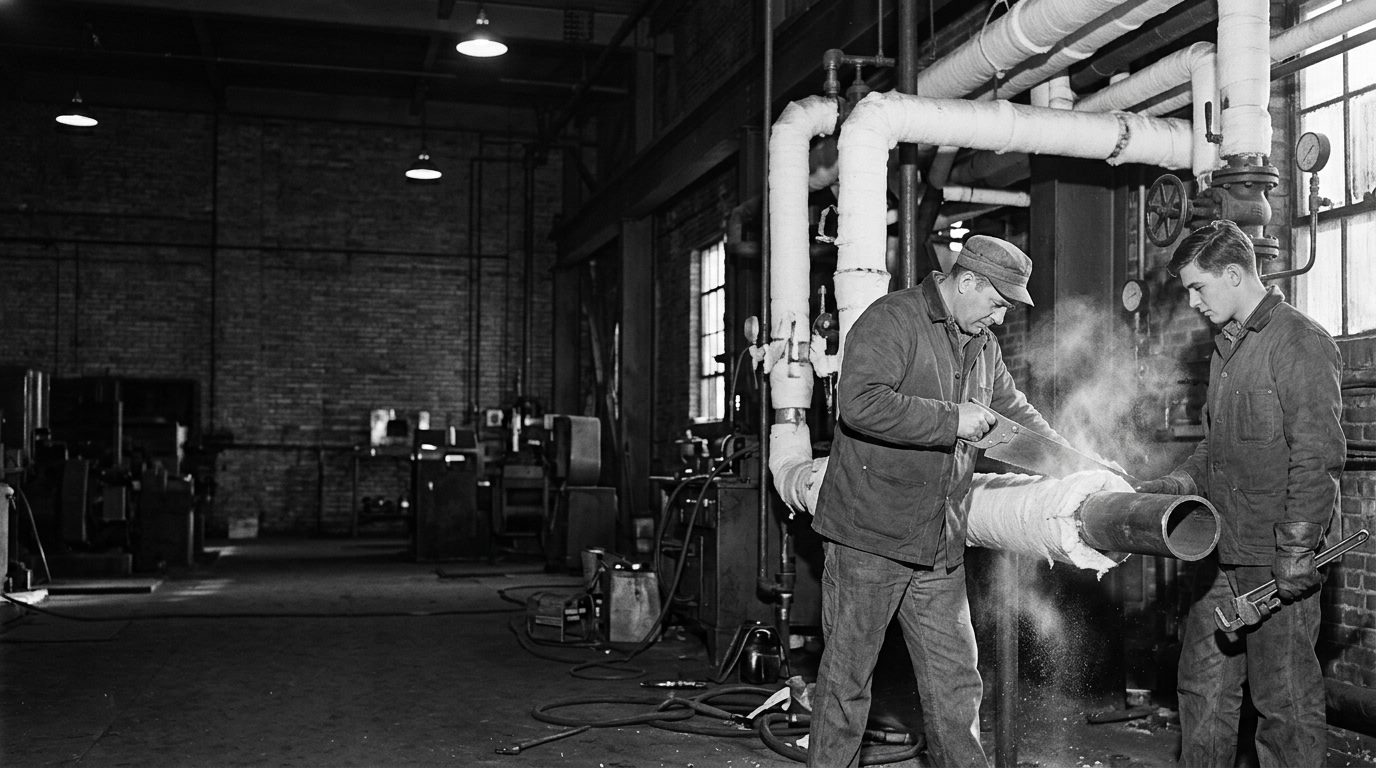
Shipyard trades worked in sealed compartments thick with insulation dust
- Topic
- Occupational risk
- Reading time
- 3 min
Shipyards brought dozens of trades together in tight, enclosed spaces. Insulation went on while welders, fitters and electricians worked inches away, and repair jobs meant tearing out old material that had turned brittle. Because so many contractors shared the same hulls, shipyard claims often involve long lists of employers and products. That complexity is manageable when the work history is laid out carefully.
Why repair work was often worse
New construction usually meant installing fresh insulation. Overhaul and repair meant ripping out insulation that had been in place for years, often dry and crumbling. Workers cut it away with knives and saws, and the debris fell onto decks where others kept working. Compartments had little airflow, so dust hung in the air for hours. Anyone who worked in those spaces, even for a single overhaul, may have had heavy exposure. When you describe your shipyard work, try to recall whether jobs were new builds, conversions or repairs, and which parts of the ship you worked in most.
Sorting out many employers on one site
A single shipyard could host the yard's own workforce plus many outside contractors, each bringing different products. That can make it hard to remember who employed you at a given time, especially if you moved between contractors. Your Social Security earnings record lists employers by year, which helps anchor the timeline. Union hall records can show which contractor dispatched you. Coworkers may remember product names or brands that were stacked on the pier. Each of these pieces helps connect your work to the companies that made or supplied the asbestos materials you were around.
Why shipyard evidence is well developed
Shipyard exposure has been part of asbestos litigation for decades. Over that time, attorneys and researchers have built up detailed knowledge of which products were used at many yards, along with testimony from former workers. That existing record can support a new claim, because you may not need to prove from scratch that a product was present. You still need to show that you worked at the yard during the relevant period and describe what you did there. The more specific your memory of locations, ships and tasks, the more useful that existing evidence becomes.
What to do next
- 1
List each shipyard you worked at, the years, and whether you worked for the yard or a contractor.
- 2
Order your Social Security earnings statement to confirm employer names and dates.
- 3
Contact former coworkers who can describe the work areas and materials you shared.
- 4
Note the names of any ships or hull numbers you remember working on during each job.
Questions
Common questions
Keep reading
Related resources
Find out in minutes whether a claim is still available
Free, confidential case review for patients and families in all 50 states.