Medical
How Mesothelioma Spreads
Mesothelioma tends to spread along surfaces before it spreads through blood
- Topic
- Types, staging & prognosis
- Reading time
- 3 min
Mesothelioma tends to grow in a distinctive way. Rather than forming a single ball of tumor that sends cells through the bloodstream early, it usually creeps along the lining where it started. Understanding this pattern helps explain its symptoms, why scans can underestimate it and why doctors watch certain areas closely.
Growth along the lining
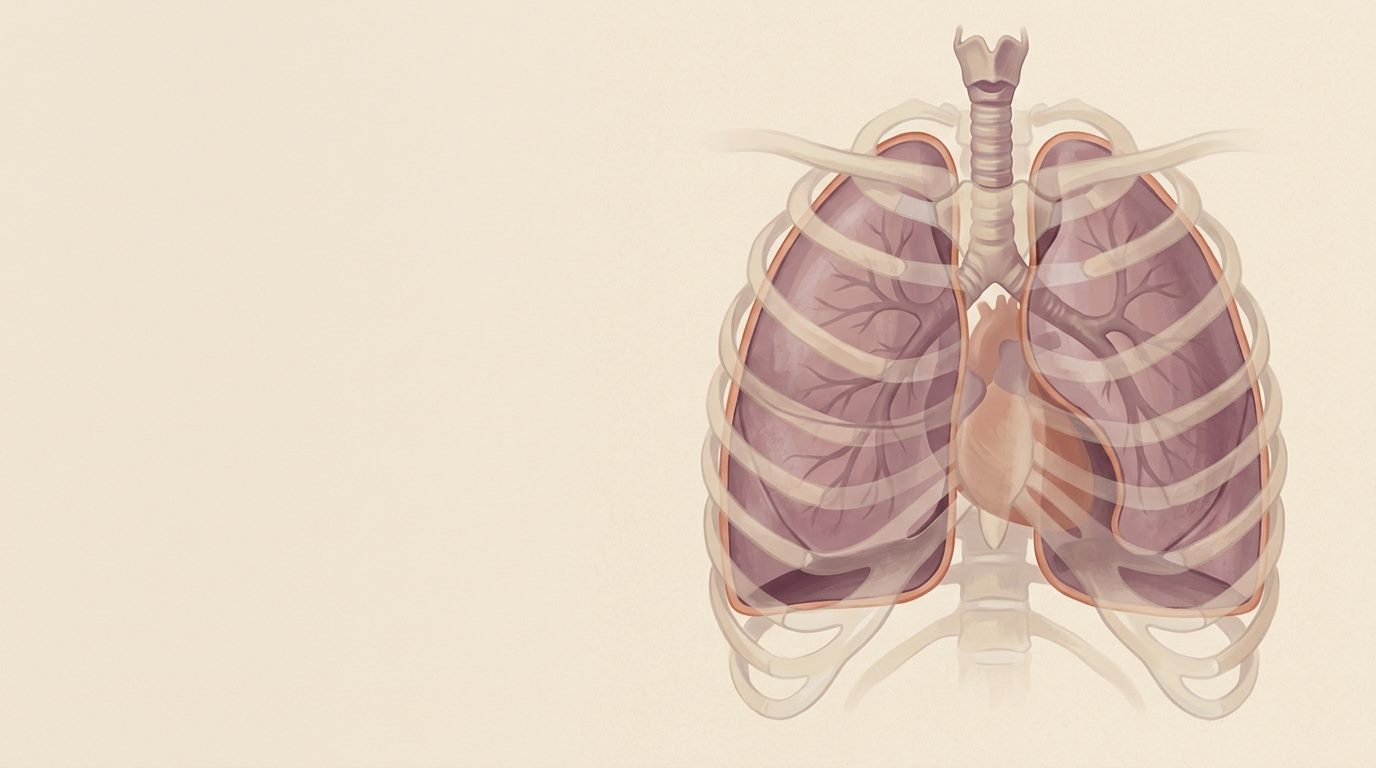
In the chest, the tumor typically spreads across the pleura, covering the lung and the inner chest wall like a thickening sheet. It can move into the grooves between lung lobes and along the diaphragm. In the abdomen, peritoneal disease spreads across the surfaces of organs and the abdominal wall. This surface pattern often causes fluid to build up and can gradually restrict breathing or digestion. It also makes the disease harder to measure than tumors that grow as a round mass.
Invasion into nearby structures
Over time, the tumor may push into deeper structures: lung tissue, chest wall muscle and ribs, the diaphragm, or organs in the center of the chest. Invasion of the chest wall often causes localized pain. Some people develop tumor growth along the tracks left by earlier procedures such as biopsies or drains. Doctors may use MRI or careful CT review to assess how deep the tumor has gone, because that affects surgical options and staging. Some centers use radiation or careful planning to reduce the chance of tumor growing along procedure tracks. Ask whether this is recommended in your case, particularly if you have had several drains or biopsies.
Nodes and distant spread
Spread to lymph nodes usually happens after local growth, and distant spread, such as to the other lung, the abdomen from the chest, or other organs, tends to occur later in the course. Autopsy studies have shown that distant spread can be more common than scans suggest, which is one reason systemic treatments are part of many plans. Regular follow-up scans help catch changes, and new symptoms in distant areas should always be reported. Symptoms of distant spread depend on where it occurs. Abdominal swelling, new bone pain, or breathlessness on the opposite side are examples worth reporting promptly.
What to do next
- 1
Report new pain in the chest wall, ribs or back to your team promptly.
- 2
Watch for lumps near biopsy, drain or surgery scars and mention them at visits.
- 3
Ask whether MRI is recommended to assess chest wall or diaphragm involvement.
- 4
Keep a list of new symptoms in areas away from the original tumor site.
Questions
Common questions
Keep reading
Related resources
Find out in minutes whether a claim is still available
Free, confidential case review for patients and families in all 50 states.