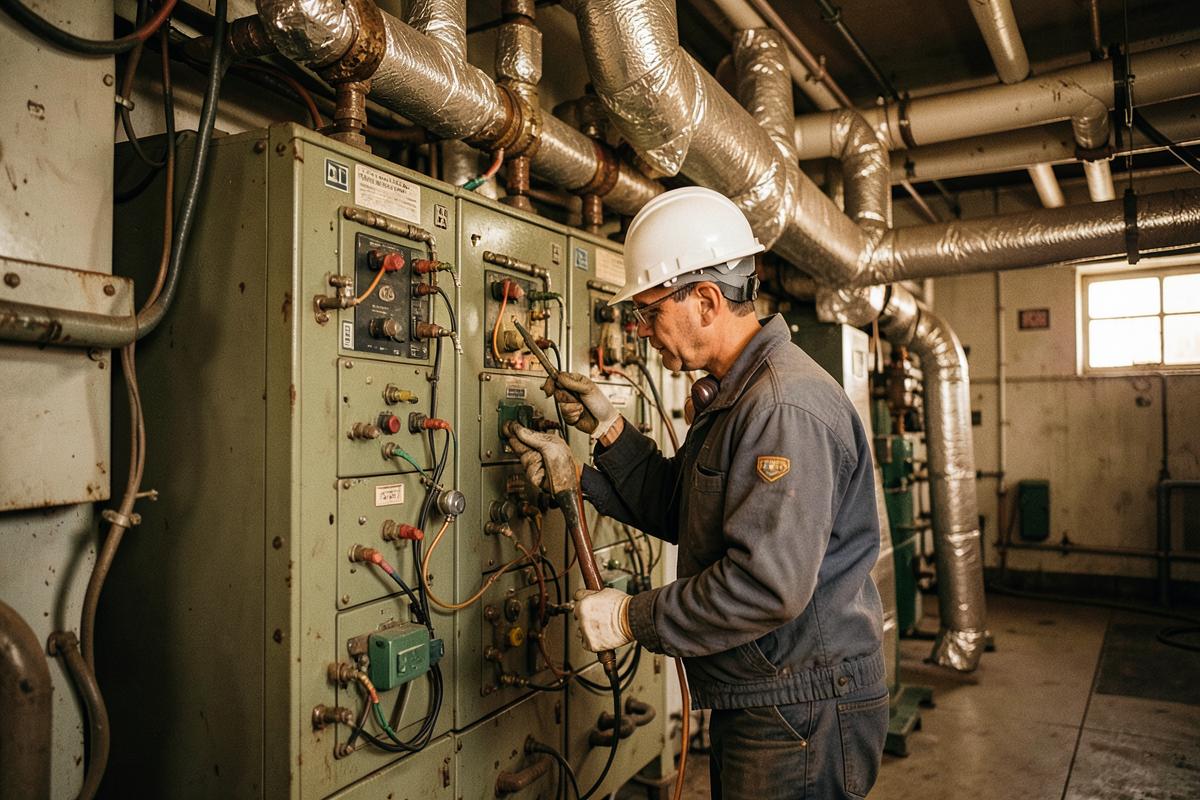
At work
Auto Mechanics
Brake and clutch work released asbestos dust into every shop bay
- Topic
- Occupational risk
- Reading time
- 3 min
For decades, many brake linings, clutch facings and gaskets contained asbestos. Mechanics handled these parts every working day, and common shop practices like blowing out brake drums with compressed air sent dust into the whole bay. Because the work was so routine, many mechanics built up years of steady exposure without anyone warning them about the parts they were handling.
Brake jobs and compressed air
When a mechanic pulled a brake drum, the worn lining material inside had often turned to fine dust. Blowing it out with an air hose was standard practice in many shops for years. That cloud spread through the bay, reaching the mechanic and anyone working nearby. Sweeping the floor afterward stirred it up again. Grinding, sanding or beveling new linings to fit could add more dust to the same air. If you did brake work regularly, estimate how many jobs you did in a typical week and how you cleaned the parts. Those details help show the scale of exposure over time.
Clutches, gaskets and other parts
Brakes weren't the only source of dust in the shop. Clutch facings, some engine and exhaust gaskets, and certain heat shields could also contain asbestos in earlier vehicles and replacement parts. Removing old clutches, scraping gasket surfaces clean and handling heat-resistant parts may have released fibers each time. Mechanics who worked on heavy trucks, buses or farm equipment sometimes handled much larger components with more material in them. List the types of vehicles you worked on, the repairs you did most often and whether you rebuilt parts or simply swapped them out.
Why product identification matters
Mechanics often used parts from specific suppliers or brands, and many still remember the boxes they came in. Knowing which brands you used helps identify the companies responsible for your exposure. If you don't remember, think about the parts stores or distributors your shop relied on, whether you worked at a dealership that sold its own branded parts, or what coworkers recall using. Shop invoices, photos or old catalogs may help too. Because so many brands were sold over the years, careful product identification is often the most important step in an auto mechanic's claim.
What to do next
- 1
Estimate how many brake or clutch jobs you did in a typical week during each period.
- 2
Write down parts brands, suppliers or dealerships connected to the shops where you worked.
- 3
Describe how your shops cleaned brake parts, including air hoses, brushes or dry sweeping.
- 4
List every shop, dealership or fleet garage you worked in, with approximate years for each.
Questions
Common questions
Keep reading
Related resources
Find out in minutes whether a claim is still available
Free, confidential case review for patients and families in all 50 states.